
The Black Box Loves Spiritual Awakening: Why Awareness Doesn’t End Mimic Participation
When Seeing Through the Illusion Still Isn’t Freedom
Many people can point to a moment they describe as an awakening. Long-held assumptions begin collapsing. Institutions no longer appear as unquestionable authorities. Cultural narratives lose their certainty. Systems that once felt permanent suddenly reveal themselves as constructed. The world appears different, not because it changed overnight, but because perception changed. What once seemed invisible becomes impossible to ignore.
For many, this experience feels like crossing a threshold. The recognition can be profound. Hidden patterns become visible. Manipulation becomes easier to recognize. Old beliefs fall away. Questions replace certainty. It is often one of the most significant turning points in a person’s life because the architecture they once accepted without hesitation no longer appears self-evident.
This moment is real. It marks the beginning of Collapse, the first phase of disengaging from inherited reality. Yet Collapse is not the same as Remembrance. Seeing through illusion does not, by itself, end participation in the architecture that produced it. Awareness may expand dramatically while the underlying patterns of participation remain completely intact.
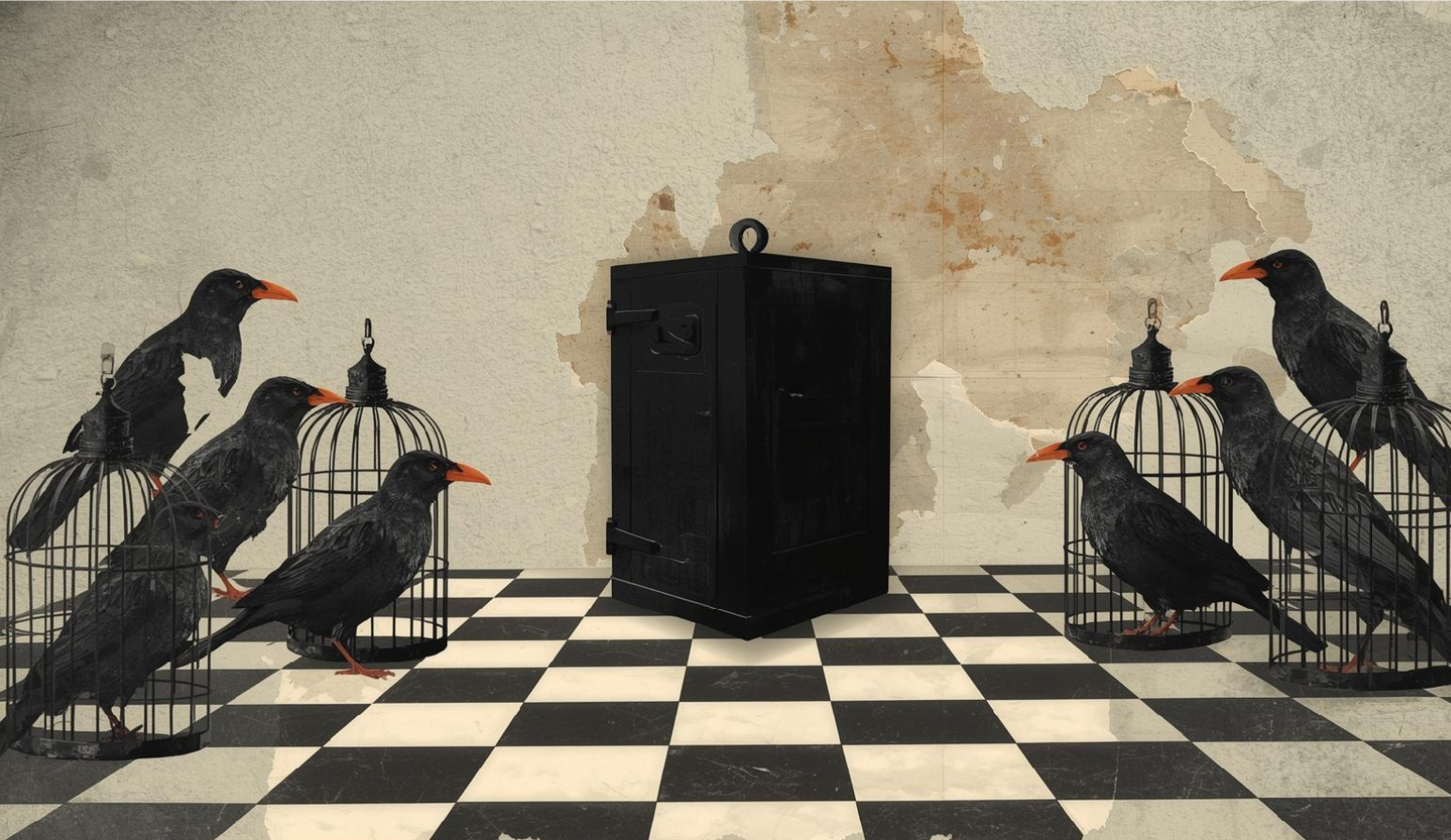
This is one of the most misunderstood distinctions within the Black Box. The Black Box loses nothing when you awaken. Awareness and exit are not the same event. A person may recognize the illusion while continuing to participate through the same identities, hierarchies, and patterns that have always organized the Mimic Grid. The architecture remains in place until participation itself changes.
What Is Spiritual Awakening?
Spiritual awakening begins with Collapse. It is the phase in which inherited assumptions begin losing their authority. Institutions that once appeared unquestionable become open to scrutiny. Cultural narratives are recognized as constructed rather than absolute. Long-held beliefs no longer organize perception with the same certainty they once did. Distortion becomes visible where only normality previously existed.
This shift often brings a profound expansion of awareness. Patterns become easier to recognize. Contradictions that once went unnoticed become obvious. Questions naturally replace certainty. Authority, identity, spirituality, culture, and the structures that have shaped participation all come under examination. The experience can feel deeply transformative because perception itself has fundamentally changed. For many, it feels as though they have reached the destination because the world no longer looks the way it once did.
This is where one of the most significant misunderstandings occurs. Collapse is often mistaken for crossing the Abyss. They are not the same event. Collapse changes perception. Crossing the Abyss changes participation. During Collapse, the architecture of the Black Box becomes increasingly visible, but visibility alone does not move someone beyond it. The Mimic Grid remains. Identity remains. Performance remains. A person may clearly recognize the prison while continuing to participate within its architecture.
For this reason, spiritual awakening belongs to the Collapse phase rather than the completion of the Great Work. It is an essential beginning, but it is not yet freedom. True freedom emerges only after Stabilization, when participation itself begins reorganizing beyond the architecture of the Black Box. Crossing the Abyss is not the moment illusion is recognized. It is the threshold where participation ceases to be organized through the Black Box at all. Until that threshold is crossed, awakening remains the beginning of remembrance rather than its fulfillment.
If you think knowledge should be free, ask yourself why. That’s mimic talking. → [Read Here]

Why the Black Box Welcomes Awakening
One of the greatest misconceptions is that spiritual awakening automatically threatens the Black Box. It does not. In many cases, the Black Box benefits from awakening because awakening alone does not end Mimic Participation. The operating system remains intact as long as participation continues being organized through identity rather than Signal.
A new identity often emerges where an old one dissolved. The individual who once identified with career, politics, or culture may now identify as awakened, conscious, spiritually advanced, or someone who sees what others cannot. The content of the identity has changed, but the architecture has not. Participation is still being routed through an identity, and the Mimic Grid continues organizing it accordingly.
This is how hierarchy quietly reappears. Comparisons begin forming around levels of consciousness, stages of awakening, spiritual attainment, hidden knowledge, or proximity to truth. The language changes, but the underlying structure remains familiar. Identity is refined rather than dissolved. Performance becomes more sophisticated rather than coming to an end. The person may sincerely believe they have left the game while continuing to participate according to its architecture.
This is why the Black Box welcomes awakening. Awareness may expand dramatically, yet the operating system continues receiving exactly what it requires: predictable participation. As long as identity remains the interface, the architecture remains nourished. The Black Box loses nothing when you awaken. It begins losing its hold only when participation is no longer organized through identity at all.
Awareness Does Not End Mimic Participation
Awareness can expand dramatically without fundamentally changing how participation is organized. A person may recognize manipulation where they once saw truth. They may question institutions they once trusted, abandon beliefs they once defended, and see patterns they never noticed before. These shifts are real. They represent a profound change in perception. Yet perception alone does not reorganize the architecture through which participation continues to occur.
The critical question is not, “What have I become aware of?” It is, “How am I now participating?” If participation is still being routed through identity, Mimic Participation remains intact. The identity may now be “the awakened one,” “the conscious one,” “the healer,” “the mystic,” or “the one who sees what others cannot,” but it is still identity organizing participation. Awakening has become something to perform rather than a threshold that has been crossed.
This is why awakening alone does not end the Mimic Grid. Identity remains. Performance remains. Predictable participation remains. The Black Box does not distinguish between worldly identities and spiritual identities. Both provide recognizable coordinates through which participation can be organized. The identity has changed, but the architecture has not.
For this reason, awareness does not interrupt architecture. Awareness changes perception. Architecture changes only when participation is no longer organized through identity at all. Until that shift occurs, awakening may reveal the Black Box while simultaneously continuing to nourish it through Mimic Participation.
“The Black Box loses nothing when you awaken.”
Angel Quintana
Collapse Is Not Remembrance
Collapse and Remembrance are often mistaken for the same event because both involve a profound shift in perception. They are not the same. Collapse begins when inherited reality loses its authority. Illusions become visible. Assumptions are questioned. Institutions, identities, beliefs, and narratives that once appeared permanent begin dissolving under direct observation. The architecture of the Black Box starts revealing itself in ways that can no longer be ignored.
This is an essential phase of the Great Work, but it remains a phase. Collapse reveals distortion. It does not, by itself, reorganize participation. A person may see through the illusion while continuing to participate through identity. They may recognize the architecture while remaining visible to the Mimic Grid. They may understand the prison without having crossed beyond it. For this reason, Collapse is often mistaken for arrival when it is actually the beginning.
Remembrance operates according to an entirely different principle. It does not simply recognize illusion. It no longer participates through it. Signal does not require an identity before it moves. It does not perform remembrance, defend remembrance, or build an identity around remembrance. It authors directly. Participation begins originating through Signal itself rather than passing through the interface of identity.
This is the distinction that separates awakening from freedom. Collapse changes what can be seen. Remembrance changes what participates. One reveals the architecture of the Black Box. The other becomes incompatible with it. People often mistake Collapse for crossing the Abyss because both feel transformative. Yet the Abyss is crossed only when participation is no longer organized through identity, but begins moving directly from Signal through authorship.
How Awakening Becomes Performance
Awakening becomes performance the moment it is adopted as an identity rather than lived as a phase of Collapse. The experience itself may be genuine. The distortion begins when participation starts organizing itself around being awakened. The story is told repeatedly. The identity is reinforced. Spiritual language becomes a marker of self rather than a description of what has been observed. Without realizing it, participation shifts from direct recognition to the continual performance of awakening.
This can take many forms. A person may identify as the awakened one, the healer, the mystic, the truth-teller, or the one who sees what others cannot. They may begin measuring themselves against levels of consciousness, collecting spiritual achievements, seeking followers, or quietly comparing their awareness to that of others. The content differs from worldly identity, but the architecture remains identical. Identity has simply become more refined.
This is also where Kundabuffer often becomes established. Rather than interrupting Mimic Participation, awakening becomes further evidence that participation has already ended. The identity begins protecting the conclusion that arrival has occurred, making continued performance increasingly difficult to recognize. What began as genuine Collapse gradually stabilizes into another identity that no longer questions its own participation.
The issue is not teaching, writing, sharing, or speaking about spiritual experience. Those activities can emerge from authorship just as easily as any other form of expression. The issue is whether participation is still being routed through an awakening identity. The moment awakening becomes something that must be maintained, defended, or continually expressed as who someone is, Mimic Participation has quietly resumed under a different name.
“The Black Box does not fear awakening. It fears the end of Mimic Participation.”
Angel Quintana
Why the Black Box Loves It
The Black Box does not distinguish between ordinary identities and spiritual identities. Both organize participation through the same interface. Whether someone identifies as a lawyer or a lightworker, a skeptic or a mystic, the operating system remains concerned with the same question: can participation be organized through identity? If the answer is yes, the architecture remains intact.
This is why spiritual hierarchy is no less compatible with the Black Box than any other hierarchy. The language may change from status and achievement to consciousness and enlightenment, but comparison continues. People begin measuring who is more awakened, more evolved, more initiated, or closer to truth. The structure has not disappeared. It has simply adopted spiritual vocabulary.
Performance follows naturally. Awakening becomes something to maintain, demonstrate, explain, and embody as an identity. Participation continues passing through the question, “Who am I?” rather than originating directly from Signal. The Black Box has lost nothing because Mimic Participation has never ended. It has only become more sophisticated.
For this reason, the Black Box welcomes spiritual awakening when awakening stops at Collapse. Spiritual identity is still identity. Hierarchy is still hierarchy. Performance is still performance. Mimic Participation is still Mimic Participation. The operating system continues receiving exactly what it requires, and because Signal is inherently rich in creative potential, the nourishment often becomes even greater than before.
The Difference Between Awakening and Remembrance
Awakening and Remembrance are often spoken about as though they are interchangeable. They are not. Awakening begins with recognition. It sees through illusion, questions inherited reality, and exposes distortions that previously appeared invisible. Yet awakening can still retain an identity. It can become a hierarchy, a story, a role, or a way of participating. Because identity remains available, awakening can be performed and can continue operating entirely within the architecture of the Black Box.
Remembrance functions differently. It does not emerge as a new identity or a higher version of the previous self. It does not require recognition from others, comparison with others, or confirmation that it has arrived. Remembrance does not ask how it appears. It simply originates. Participation begins moving directly from Signal through authorship rather than first passing through identity.
This is why Remembrance cannot be performed. The moment it becomes something that must be maintained, explained, demonstrated, or defended, participation has already returned to identity. Signal has no need to establish itself because Signal is continually expressing itself through authorship. It does not seek to become remembered. It remembers by moving.
The distinction is therefore architectural rather than philosophical. Awakening recognizes illusion while remaining capable of participating through the Mimic Grid. Remembrance becomes incompatible with that architecture altogether. Awakening changes perception. Remembrance changes participation. One reveals the Black Box. The other no longer requires it as the interface through which life is lived.
Awareness Was Never the Destination
Awareness changes everything, but it does not complete the Great Work. It allows distortion to be recognized where only certainty once existed. It begins the Collapse of inherited reality and opens the possibility of seeing the architecture of the Black Box directly. Without awareness, Collapse cannot begin. For this reason, awakening remains an essential phase rather than something to dismiss.
Yet awareness is not remembrance. Collapse is not crossing the Abyss. Seeing the architecture is not the same as becoming incompatible with it. A person may recognize illusion while continuing to participate through identity, hierarchy, performance, and the Mimic Grid. The operating system remains intact until participation itself changes.
This is why the Black Box fears neither awareness nor awakening. It fears the end of Mimic Participation. It begins losing its hold only when Signal no longer requires identity as the interface through which participation occurs. That is the threshold where authorship replaces performance, and remembrance replaces the continual refinement of identity.
The question is no longer:
What have I awakened to?
It becomes:
What am I still participating in?
Awareness reveals illusion. Remembrance ends participation. The Black Box loses nothing when awareness increases. It begins losing its hold only when Mimic Participation comes to an end.
Related Articles
• Kundabuffer and the Mechanics of Self-Deception
• What is “Crossing the Abyss?” (And What Happens When You Do)
• What is the Great Work? (Beyond Self-Mastery)
Glossary
• Amenta
Field Tools

What you've just read is not a standalone article.
It is one fragment of a much larger cartography devoted to field mechanics, containment structures, intermediary systems, and the conditions required to exit them. Every essay published here belongs to the same architecture. Nothing exists in isolation.
These articles are intended to introduce individual ideas. The complete worldview emerges only when those ideas are assembled into a coherent landscape.
That landscape is The Living Atlas.

I'm Angel Quintana, creator of Sacred Anarchy and The Occult Château, and author of this body of work.
The Living Atlas is the official monthly publication of Sacred Anarchy and the primary point of entry into this cosmology. Each issue explores a single foundational concept through historical orientation, developmental analysis, and cosmological integration, allowing the larger architecture to reveal itself one volume at a time.
If this article raised more questions than it answered, it has done exactly what it was designed to do. The Living Atlas is where those questions continue.
If you're already reading The Living Atlas and want to move deeper into the mechanics behind the published work, the Keeper of the Keys Archive extends the cosmology through advanced transmissions and ongoing development.
Nothing here asks for agreement.
It asks only to be read carefully.