
What Are the Roads of Amenta? How the Black Box Routes Adaptive Participation
Life is often understood as a succession of choices. At every stage, new decisions appear to shape the direction of participation. Which career to pursue. Which relationship to enter or leave. Which beliefs to adopt. Which spiritual tradition to follow. Which political philosophy to support. Which purpose feels most meaningful. The assumption is simple. Greater freedom comes from making better choices, and a better life emerges from selecting the right path among the many that appear available.
Because of this, attention naturally turns toward improving decision-making. People search for greater clarity, better strategies, wiser mentors, stronger convictions, and more accurate ways of evaluating their options. Success is often measured by arriving at the right destination while avoiding the wrong ones. Very little attention is given to a more fundamental question. Before any decision is made, where did the available choices come from?
The possibility explored here is not that choice is an illusion, but that choice occurs within an architecture that quietly determines which routes become available in the first place. Participation may feel completely voluntary while still unfolding along pathways that existed long before any individual began traveling them. The question is no longer whether people are choosing. The question is whether they are choosing among routes they authored or routes they inherited.
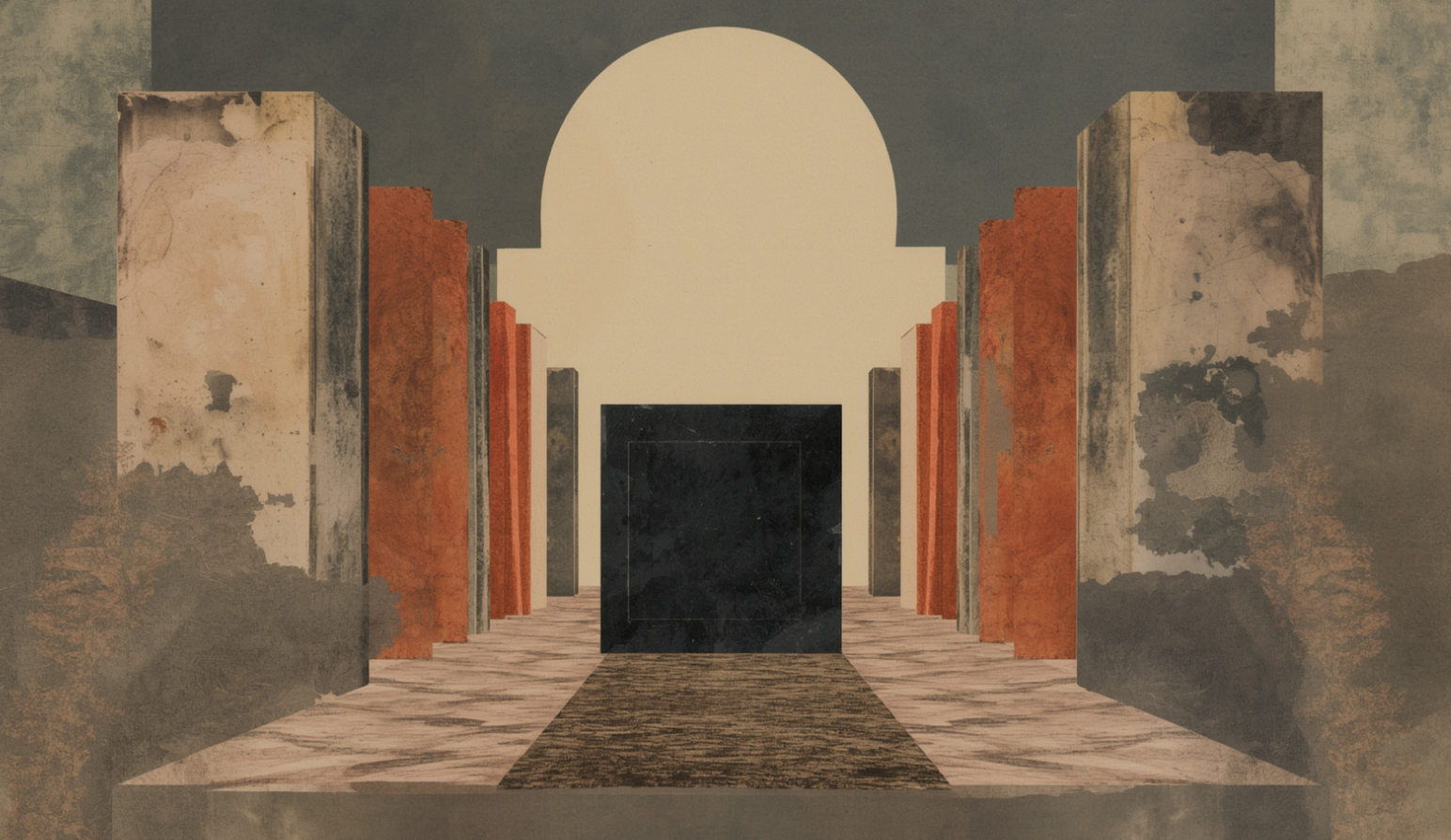
These inherited pathways are called the Roads of Amenta. They are not physical roads, nor are they simply social expectations or cultural traditions. They are the routing architecture through which adaptive participation moves after direct orientation has been interrupted. Understanding the Roads of Amenta reveals that one of the defining characteristics of Amenta is not the absence of movement, but the quiet organization of movement long before the first step is ever taken.
“A mimic life is not a false life. It is a life faithfully traveled along inherited roads.”
Angel Quintana
Why Operating Architectures Require Routes
Every operating architecture requires routes. An operating system cannot simply exist as an abstract structure. It must provide pathways through which movement can occur. A city requires streets. A railway requires tracks. An airport requires flight corridors. Without routes, movement becomes random, disorganized, and incapable of sustaining a complex system. Organization is only possible when participation can be guided through established pathways.
Imagine arriving in a city you have never visited before. Thousands of destinations exist, yet you cannot drive across buildings, through rivers, or over private property simply because you wish to. The city has already determined where movement can occur. Streets, intersections, bridges, highways, and traffic patterns quietly organize every journey long before you decide where you want to go. Your destination may be your own choice, but the routes available for reaching it have already been established.
The Black Box functions in much the same way. Once the Breach has made adaptive participation necessary, an operating architecture alone is not enough. Participation must also be organized. The Black Box therefore provides inherited routes through which adaptive participation can move. These routes make civilization coherent by giving adaptation predictable pathways rather than leaving it fragmented or directionless.
Civilizations inherit these routes. Institutions reinforce them. Families teach them. Cultures normalize them. Generations gradually mistake them for the natural way life unfolds. Yet the Roads of Amenta are not inventions of civilization itself. Civilization expresses them because the operating architecture already requires them. The Roads are the routing architecture of the Black Box, making organized adaptive participation possible long before any individual begins choosing where to go.
What the Roads of Amenta Are
The Roads of Amenta are not physical roads, careers, governments, religions, institutions, identities, or belief systems. Those are the places adaptive participation eventually arrives, the structures it encounters, or the roles it assumes while traveling. They should not be confused with the Roads themselves. Just as a highway is different from the cities connected by it, the Roads of Amenta are distinct from the countless destinations and structures that exist along their paths.
The Roads of Amenta are the routing architecture through which the Black Box organizes adaptive participation after the Breach. Once direct orientation has been interrupted, participation no longer moves spontaneously through Signal. It becomes organized through inherited routes that quietly determine how movement is expected to unfold. These routes establish the pathways through which adaptive participation becomes coherent, repeatable, and socially recognizable.
The importance of the Roads is not that they tell people what to believe. They determine how participation moves. They establish which directions appear legitimate, which forms of movement become familiar, and which destinations are considered attainable. Long before someone decides what kind of life they wish to live, the Roads have already defined the pathways through which that life is expected to unfold.
This is why the Roads are so rarely recognized. Attention naturally settles on the destinations rather than the routing architecture connecting them. People debate careers, political systems, religions, identities, and philosophies, assuming these are the primary structures shaping participation. Yet beneath each of them lies the same routing architecture quietly organizing movement itself. The Roads do not determine every destination. They determine the pathways through which destinations become reachable.
Understanding this distinction changes the inquiry completely. Rather than asking which destination is correct, a deeper question emerges. What operating architecture established these routes before anyone ever began traveling them? That question marks the beginning of understanding the Roads of Amenta.
“Most people don’t feel trapped because they can choose between roads they never realized they didn’t build.”
Angel Quintana
The Black Box Routes Participation
The defining function of an operating system is not simply to exist. It is to organize movement. Every operating system establishes protocols, permissions, compatible actions, and available pathways before participation ever begins. It determines what can connect, where movement can occur, which actions are recognized, and which routes remain unavailable. Participants experience movement as they interact with the system, yet the architecture organizing that movement was already present before they arrived.
The Black Box functions in precisely this way. It does not merely provide an environment for adaptive participation. It continually routes adaptive participation through inherited pathways. Once the Breach has interrupted direct orientation, participation no longer emerges directly from Signal. It begins moving through routes already established by the operating architecture. The Black Box does not need to dictate every decision because it has already organized the pathways through which decisions become possible.
This distinction reveals why navigation becomes such an important feature of life within Amenta. People devote extraordinary effort to making better decisions, finding the right opportunities, avoiding mistakes, improving strategies, and selecting the most promising direction. Yet navigation is only meaningful because routing already exists. One cannot navigate where there are no established routes. The ability to choose among available pathways quietly depends upon an operating architecture that created those pathways beforehand.
Seen this way, adaptive participation resembles traveling through a vast transportation network. Every traveler makes genuine decisions about where to go, when to leave, and which route to follow. Those choices are real. What is rarely questioned is the network itself. The highways, intersections, bridges, and corridors were already in place before the journey began. In the same way, the Black Box does not eliminate movement. It organizes movement so thoroughly that routing itself becomes almost invisible.
The Roads Feel Like Freedom Because They Offer Choices
One of the greatest strengths of the Roads of Amenta is that they rarely eliminate choice. If participation were reduced to a single path, the architecture would become immediately visible. Instead, the Black Box offers an extraordinary number of routes. Medicine. Law. Entrepreneurship. Therapy. Academia. Religion. Politics. Art. Business. Military service. Entertainment. Social activism. Scientific research. Even lives that appear unconventional often unfold along routes the operating architecture has already made available.
From within the Roads, these possibilities feel radically different. One person becomes a physician while another becomes a monk. One builds a business while another rejects commerce altogether. One enters politics while another retreats into spiritual practice. Their beliefs differ. Their lifestyles differ. Their communities differ. Everything about their lives appears unique. Yet beneath those visible differences, participation continues moving through pathways that were already established before any of them began traveling.
This is why choice and routing are not opposites. Choice remains real. People genuinely choose among the routes before them. What often goes unnoticed is that the available routes were inherited rather than authored. Freedom becomes defined as selecting among existing pathways instead of questioning the operating architecture that made those pathways appear in the first place. The experience of choosing remains authentic while the architecture organizing those choices remains almost entirely invisible.
This helps explain why innovation inside Amenta can feel so revolutionary while leaving the underlying architecture untouched. New professions emerge. Old institutions disappear. Entire industries transform. Technology changes the appearance of civilization almost beyond recognition. Yet adaptive participation continues moving through inherited routing. The roads evolve. The operating architecture remains.
This is one of the defining characteristics of mimic reality. Movement feels free because movement is genuinely occurring. Decisions feel personal because decisions are genuinely being made. What remains largely unseen is that participation has been quietly organized long before the first choice ever appeared. The deepest question, therefore, is no longer whether we are free to choose. It is whether we have mistaken the freedom to choose among inherited roads for the freedom to author the roads themselves.
“When every path feels familiar, it rarely occurs to us that we may have inherited the map.”
Angel Quintana

The Roads Determine What Appears Available
The Roads of Amenta do far more than guide behavior. They determine what appears available before behavior ever begins. Every decision starts with a field of perceived possibilities. The Black Box quietly shapes that field long before anyone consciously weighs their options. Ambition, morality, success, purpose, relationships, achievement, and even failure are experienced as personal discoveries, yet the range of what appears conceivable has already been organized through inherited routing.
Imagine opening the navigation app on your phone. You enter a destination, and several routes immediately appear. You compare travel times, avoid traffic, and choose the option that seems best. The experience feels entirely self-directed. What rarely occurs to the traveler is that the application is only showing routes that already exist. It never suggests driving across a lake, through a forest, or over the rooftops of a city because those possibilities do not belong to the routing system. Choice is genuine, but it unfolds within a landscape that has already determined what qualifies as a route.
The Roads of Amenta function in much the same way. A young person may believe they are independently deciding what a meaningful life looks like. They consider becoming a physician, an entrepreneur, a therapist, an artist, a parent, a professor, or a religious leader. Those possibilities feel like discoveries arising from within. Yet each has already been made visible by the operating architecture. Countless other ways of participating never appear because the Roads do not illuminate them. They remain outside the inherited routing system.
This is one of the most subtle characteristics of the Black Box. It rarely tells people what to choose. Instead, it determines what appears worthy of choosing in the first place. Participation feels independent because the act of choosing is real. What remains largely invisible is the architecture quietly determining which possibilities become imaginable while countless others never enter awareness at all.
The Roads Evolve While the Operating Architecture Remains the Same
One of the reasons the Roads of Amenta are so difficult to recognize is that they are not fixed. They evolve continuously. Civilizations change. Institutions rise and fall. New professions appear. Entire industries emerge where none previously existed. Looking only at the surface, it can seem as though humanity is constantly inventing entirely new ways of participating. Yet beneath those changes, the operating architecture remains remarkably consistent.
A medieval civilization may have organized participation around priests, kings, warriors, monasteries, and royal courts. A contemporary civilization may organize participation around entrepreneurs, influencers, therapists, startup founders, universities, and multinational corporations. The destinations have changed. The language has changed. The technologies have changed. Even the values appear different. Yet participation continues moving through inherited routes established by the same routing architecture.
This is why innovation within Amenta can be profoundly convincing without fundamentally altering the system itself. New roads are continually constructed, old roads are abandoned, and familiar roads are widened, redirected, or modernized. The operating architecture has no need to preserve specific routes because its coherence does not depend upon them. It only needs to preserve the logic through which new routes are continually generated. Innovation therefore becomes one of the ways the operating architecture maintains itself while appearing to transform.
Seen from this perspective, the question is no longer whether civilization is changing. It clearly is. The more revealing question is whether those changes represent new operating architecture or simply new routes generated by the same one. The Roads of Amenta evolve constantly, allowing each generation to experience its world as unprecedented while adaptive participation continues moving through remarkably familiar patterns. The roads change. The routing remains.
Hierarchy Organizes Traffic Upon Existing Roads
Hierarchy is often treated as the primary organizing force of civilization, but its role is more limited than it first appears. Hierarchy does not create movement. It does not establish the pathways through which participation becomes possible. Those pathways already exist. The Roads of Amenta determine where adaptive participation can move. Hierarchy emerges afterward to organize movement along routes that have already been accepted as legitimate.
A highway offers a useful analogy. The road exists before traffic laws, speed limits, traffic lights, highway patrol, or road signs are introduced. Vehicles can travel because the route already exists. Once movement becomes substantial, systems are created to regulate flow, establish priorities, reduce conflict, and maintain order. The purpose of traffic management is not to create the road. It is to organize participation upon it.
The same pattern appears throughout Amenta. Experts, authorities, teachers, institutions, leaders, influencers, and countless other forms of hierarchy arise because the Roads already exist. They help determine who may guide others, which routes are considered respectable, how movement should occur, and what constitutes successful navigation. Their authority depends upon inherited pathways that adaptive participation already recognizes. Without the Roads, there would be nothing for hierarchy to organize.
This distinction changes the order in which hierarchy is understood. It is not the origin of adaptive participation but one of its later refinements. Hierarchy depends upon the Roads. The Roads do not depend upon hierarchy. Once this relationship becomes visible, hierarchy is no longer mistaken for the architecture of Amenta itself. It is recognized as one of the many systems that manages traffic upon routes the Black Box had already established.
The Roads Produce Mimic Lives
The Roads of Amenta do not produce empty lives. They produce convincing ones. People fall in love, raise children, build businesses, devote themselves to meaningful work, practice their faith, care for others, create art, serve their communities, and pursue lives they sincerely believe are their own. None of these experiences should be dismissed as imaginary. The emotions are genuine. The commitments are genuine. The participation is genuine.
What distinguishes a mimic life is not the absence of sincerity. It is the source from which participation has been organized. A life may appear deeply original while still unfolding almost entirely through inherited routing. Goals are pursued because they have been made visible. Success is measured because its standards have already been established. Meaning is discovered within pathways the operating architecture quietly prepared long before the individual arrived. The life feels authored because the participation is authentic, even though the routes themselves were inherited.
This is why mimicry is so difficult to recognize. It does not ask people to pretend. It asks them to participate faithfully. Every decision feels personal. Every achievement feels earned. Every relationship feels chosen. From within the Roads, nothing appears artificial because the operating architecture has become the ordinary environment through which life unfolds. The question is not whether people truly care about the lives they are living. The question is whether the pathways giving shape to those lives were ever directly authored.
Understanding this distinction transforms the meaning of mimicry. It is no longer reduced to imitation, copying, or deception. Mimicry becomes participation that faithfully follows inherited routing while remaining largely unaware that the routing itself was inherited. The life may be rich, compassionate, disciplined, creative, and deeply fulfilling, yet still move according to an operating architecture that quietly preceded every major decision.
This leads to one of the defining recognitions of Amenta:
A mimic life is not a false life. It is a life faithfully traveled along inherited roads.
“The road that feels most natural is often the one you’ve traveled so long you no longer remember entering it.”
Angel Quintana
The Roads Keep the Black Box Invisible
One of the most effective qualities of the Roads of Amenta is that they quietly direct attention away from the operating architecture that produced them. As long as participation remains focused on choosing among available routes, the Black Box itself rarely comes into view. The conversation revolves around which path is best rather than how the pathways came to exist at all.
People spend years asking which career will be most fulfilling, which religion is closest to truth, which business model is most successful, which identity feels most authentic, which political philosophy should prevail, or which purpose gives life the greatest meaning. These questions can be sincere, thoughtful, and deeply important. Yet they all begin from the same underlying assumption that the available routes are simply the natural landscape of human participation.
The Roads preserve this assumption by making navigation appear to be the central challenge. If the primary question is always which route should be taken, then the operating architecture responsible for creating the routes remains largely invisible. Attention becomes absorbed by comparison, optimization, progress, and destination. Very little attention is given to the routing system quietly organizing every available choice before the journey even begins.
This is why the Black Box rarely needs to defend itself. The Roads do that work automatically. They keep participation occupied with movement while leaving the architecture producing that movement largely unquestioned. The result is a civilization that becomes increasingly skilled at navigating inherited pathways while rarely asking the question that changes everything:
Who organized the roads before anyone began traveling them?
⸻
Life often comes to be understood as the pursuit of better decisions. Find the right career. Build the right relationship. Discover the right purpose. Develop the right identity. Follow the right strategy. The assumption quietly guiding these pursuits is that freedom consists of choosing wisely among the possibilities already before us. The search becomes increasingly refined, yet it rarely extends beyond the available routes themselves.
The Roads of Amenta invite a different inquiry. They suggest that the deepest question is not whether we are making choices, but whether the choices we experience as available were ever directly authored. Participation may feel completely self-directed while still moving through pathways established long before we arrived. The sincerity of the journey remains real. The movement remains real. What changes is our understanding of the architecture quietly organizing that movement.
Once the Roads become visible, navigation is no longer the only mystery. A more fundamental question begins to emerge. Rather than asking which road leads to the most meaningful destination, attention turns toward the routing architecture that made those roads appear in the first place. The focus shifts from movement to the conditions organizing movement.
The question is no longer:
Which road should I choose?
It becomes:
What would participation look like if it no longer depended upon inherited roads at all?
Related Articles
• Why You Feel Disconnected From Your Origin
• What Is “Crossing the Abyss?”
• The Roadmap Out of Hell Was Hidden. Until Now.
Glossary
• Signal

What you've just read is not a standalone article.
It is one fragment of a much larger cartography devoted to field mechanics, containment structures, intermediary systems, and the conditions required to exit them. Every essay published here belongs to the same architecture. Nothing exists in isolation.
These articles are intended to introduce individual ideas. The complete worldview emerges only when those ideas are assembled into a coherent landscape.
That landscape is The Living Atlas.

I'm Angel Quintana, creator of Sacred Anarchy and The Occult Château, and author of this body of work.
The Living Atlas is the official monthly publication of Sacred Anarchy and the primary point of entry into this cosmology. Each issue explores a single foundational concept through historical orientation, developmental analysis, and cosmological integration, allowing the larger architecture to reveal itself one volume at a time.
If this article raised more questions than it answered, it has done exactly what it was designed to do. The Living Atlas is where those questions continue.
If you're already reading The Living Atlas and want to move deeper into the mechanics behind the published work, the Keeper of the Keys Archive extends the cosmology through advanced transmissions and ongoing development.
Nothing here asks for agreement.
It asks only to be read carefully.