

Why Sharing Your Story Doesn’t Always Set You Free
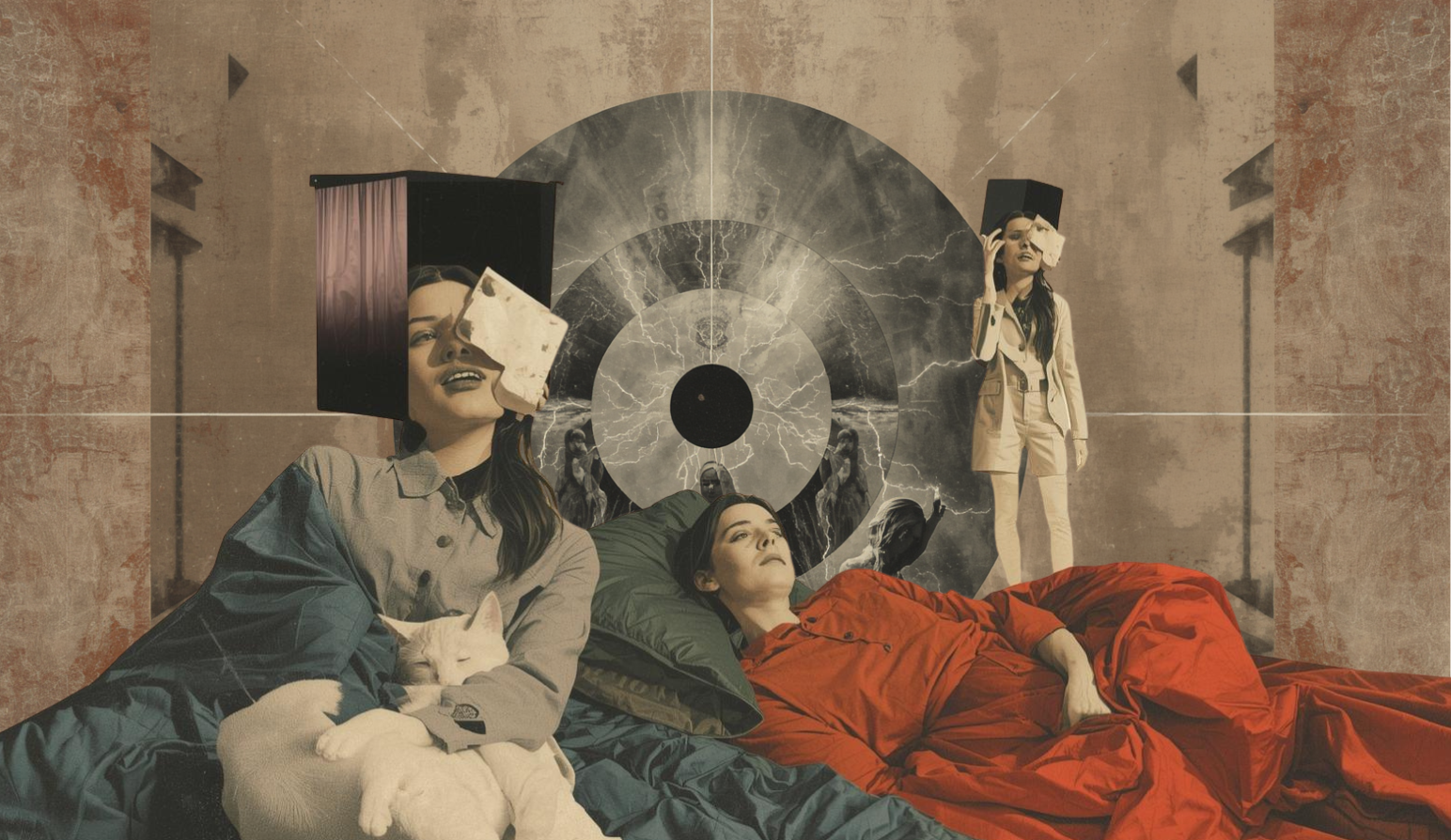
Human beings naturally organize experience through narrative. We tell stories about what happened, why it happened, and what it meant. Those stories allow individual moments to become part of a larger continuity rather than remaining isolated events. They help preserve experience, communicate understanding, and make life feel coherent across the passage of time. Without narrative, memory would exist as scattered fragments with little relationship to one another. Story is one of the primary ways history becomes intelligible.
There is nothing inherently distorted about this process. Narrative gives shape to experience in much the same way the Archive preserves it. A difficult season can be understood through the story that eventually emerges from it. An important relationship can be appreciated long after it has ended because its meaning has been woven into a larger narrative. Stories allow us to revisit the past through recall without requiring every experience to remain active within the present. They preserve continuity by helping history remain accessible without continually asking to participate.
Yet a different possibility begins to emerge once replay enters the picture. What if repeatedly telling a story quietly allows replay to continue participating? What if each return to the same narrative does more than preserve history? A story can certainly help us understand what has been lived. It can also become one of the ways an experience continues organizing perception long after the event itself has ended. The question is not whether stories have value. The question is whether a story has quietly become another way participation continues instead of naturally becoming history.
“Every retelling asks the same question: Does this preserve history, or preserve participation?”
Angel Quintana
Stories Create (and Reinforce) Participation
Stories are one of the primary ways human beings organize experience across time. Individual moments rarely remain isolated. They are gathered into narratives that explain what happened, why it mattered, and how one experience relates to another. In this way, stories preserve participation by transforming separate events into a coherent history. They allow experience to become understandable, communicable, and meaningful long after the original events have concluded. Narrative gives structure to memory without requiring every experience to remain equally present.
This capacity is one of narrative’s greatest strengths. Stories make it possible to share wisdom, preserve relationships, pass on knowledge, and communicate experiences that would otherwise remain fragmented. They help organize the Archive into something that can be understood rather than leaving memory as a collection of disconnected moments. Narrative itself is not the distortion. It serves an essential role in preserving continuity by allowing history to remain accessible without requiring history to continually organize the present.
The importance of narrative becomes clearer once replay is recognized. Replay rarely travels through isolated memories alone. It often moves through the stories built around those memories. Every retelling has the potential to preserve not only the history of an experience, but also its continued participation. A story can faithfully preserve what happened. It can also quietly become one of the ways replay continues moving from yesterday into today.
When the Story Never Becomes History
Not every story occupies the same place within the Archive. Some narratives gradually become history. They remain available through recall without continually asking to be retold. Their meaning has settled into continuity, allowing the experience to preserve its value without repeatedly organizing the present. The event has ended, the story has reached completion, and both quietly become part of what has already been lived. They remain accessible without continually requesting participation.
Other stories follow a different path. They continue returning through conversations, journals, therapy sessions, personal reflection, familiar relationships, and ordinary moments that seem to invite the same narrative once again. Each retelling brings the story back into present awareness, where it begins participating long after the original event has concluded. The circumstances belong entirely to the past, yet the narrative continues accompanying perception as though its role has never fully ended. The event has ended. The story continues participating.
This difference becomes increasingly visible once attention shifts from the event itself to the narrative surrounding it. Two experiences may conclude at the same point in time, yet years later one story quietly rests within history while another continues organizing how new experiences are understood. Nothing about this observation explains why certain narratives remain active or what sustains them. It simply reveals that stories do not all behave alike. Some preserve history. Others continue participating, quietly accompanying the present long after the event itself has become part of the past.
“Stories provide orientation. They are not meant to become the architecture of perception.”
Angel Quintana
When Narrative Sustains Replay
Replay does not require the original event to remain active. The event itself may belong entirely to history while its participation quietly continues through the narrative built around it. Every return to the story creates another opportunity for that participation to enter the present once again. The circumstances no longer need to exist because the narrative now carries them forward. Replay is no longer sustained by the event. It is sustained by the continued participation of the story that surrounds it.
This raises a question that is easy to overlook. Does every return to the story move participation toward completion, or does it quietly invite participation to continue? A story can certainly preserve wisdom, context, and continuity. It can also repeatedly reactivate the same interpretations, expectations, and familiar ways of organizing present experience. The narrative itself becomes the pathway through which replay continues traveling from yesterday into today. Each retelling has the potential to do more than preserve history. It can preserve participation.
This observation does not suggest that stories should never be told or that difficult experiences should be ignored. It simply invites a different inquiry into the role narrative occupies once an event has ended. A story reaches completion when it no longer needs to organize the present. Until that point, replay may continue finding life through the narrative itself, quietly accompanying perception each time the story is revisited. Whether that participation is moving toward completion or quietly sustaining itself remains an open question, and one that deserves careful attention.
“The story is not the destination. It has fulfilled its purpose when it no longer needs to explain every new experience.”
Angel Quintana
When the Story Begins Interpreting Reality
Once a narrative continues participating long enough, its role begins to change. It no longer functions only as a record of what has been lived. It gradually becomes a framework for interpreting what is currently unfolding. New relationships are understood through familiar stories. New opportunities are measured against previous outcomes. New disappointments appear to confirm conclusions that have already been established, while new successes are quietly interpreted through the same existing narrative. The story is no longer preserving history alone. It has begun organizing perception.
This shift is subtle because the narrative feels deeply familiar. Its interpretations appear immediate, natural, and self-evident rather than inherited. Observation gradually follows interpretation instead of preceding it. Meaning arrives before the present has fully revealed itself because the story has already supplied the context through which the experience will be understood. Reality is no longer encountered on its own terms. It is continually introduced through a narrative that has been carried forward from previous experience.
Over time, the story becomes increasingly difficult to distinguish from reality itself. Every new experience quietly finds its place within the existing narrative, reinforcing interpretations that have already become familiar. The present gradually loses the opportunity to reveal something genuinely unexpected because the story has already begun explaining what the experience means before the experience has fully unfolded. The narrative no longer exists only to describe the past. It quietly becomes the lens through which the present is encountered.
When the Story Reaches Completion
The question is rarely whether a story has been told enough times. The deeper question is whether the story still needs to organize the present. Narrative naturally preserves experience by giving history structure and continuity, allowing important events to remain available long after they have concluded. That function is both necessary and valuable. A story does not need to disappear in order to reach completion. It simply reaches a point where it no longer asks to continually participate in the organization of present perception.
This distinction changes the way narrative itself is understood. History preserves experience. Replay preserves participation. Narrative has the capacity to preserve either. A completed story remains part of the Archive, available through recall without continually shaping how every new relationship, opportunity, disappointment, or success is interpreted. An unfinished story continues inviting participation, quietly accompanying perception each time it is revisited. The difference is not whether the story exists. The difference is the role it continues occupying within the present.
Completion, then, is not measured by perfect understanding or flawless interpretation. It is measured by participation. A story reaches completion when it no longer needs to organize the present. It remains available without continually explaining reality, preserving continuity without quietly becoming the framework through which every new experience is encountered. The narrative has become history. Its participation has come to rest. That possibility invites a different relationship with the stories we carry, shifting the question from how often they should be told to whether they still need to accompany us wherever we go.
“Narrative preserves history. Replay preserves participation.”
Angel Quintana
The Story Is Not the Destination
Nothing in this article suggests that stories should be abandoned or that narrative has no place within a meaningful life. Stories preserve continuity. They communicate experience, organize history, and allow important moments to remain accessible through recall. Without narrative, memory would exist as disconnected fragments rather than a coherent record of what has been lived. The question has never been whether stories have value. They clearly do. The question is whether a story has quietly assumed a role it was never meant to occupy.
A story can preserve history without continually organizing the present. It can remain available without becoming the primary framework through which every new relationship, opportunity, disappointment, or success is interpreted. Narrative serves its greatest purpose when it provides orientation rather than ongoing participation. Stories help explain where we have been. They are not meant to determine what every new experience must become. A story fulfills its purpose when it preserves continuity without quietly becoming the architecture of perception.
This distinction opens the next stage of the investigation. The question is no longer whether we tell our stories or even how often we return to them. The deeper question is whether the story has gradually become the way we experience ourselves. When a narrative continues organizing perception long enough, it can become increasingly difficult to distinguish the story from the one telling it. That possibility points toward the next distortion, where memory no longer simply preserves history but begins shaping identity itself.
Related Articles
• Why You Feel Disconnected From Your Origin
• What Is “Crossing the Abyss?”
• The Roadmap Out of Hell Was Hidden. Until Now.
Glossary
• Signal

What you've just read is not a standalone article.
It is one fragment of a much larger cartography devoted to field mechanics, containment structures, intermediary systems, and the conditions required to exit them. Every essay published here belongs to the same architecture. Nothing exists in isolation.
These articles are intended to introduce individual ideas. The complete worldview emerges only when those ideas are assembled into a coherent landscape.
That landscape is The Living Atlas.

I'm Angel Quintana, creator of Sacred Anarchy and The Occult Château, and author of this body of work.
The Living Atlas is the official monthly publication of Sacred Anarchy and the primary point of entry into this cosmology. Each issue explores a single foundational concept through historical orientation, developmental analysis, and cosmological integration, allowing the larger architecture to reveal itself one volume at a time.
If this article raised more questions than it answered, it has done exactly what it was designed to do. The Living Atlas is where those questions continue.
If you're already reading The Living Atlas and want to move deeper into the mechanics behind the published work, the Keeper of the Keys Archive extends the cosmology through advanced transmissions and ongoing development.
Nothing here asks for agreement.
It asks only to be read carefully.