
Why You Start Scrolling When You Said You Wouldn’t
This isn’t a discipline problem. The pattern is already running before you decide.
You don’t pick up your phone because you suddenly changed your mind. You don’t start scrolling because you forgot what you said you were going to do. The moment it happens, it feels small—automatic, almost invisible. One second you’re doing something else, and the next, your phone is already in your hand. The app is open. The scroll has started.
What’s confusing is that you can watch yourself doing it. You can be fully aware that you don’t want to be there, and still continue. It doesn’t feel like a clear decision. It feels like something already in motion that you stepped into halfway through.
This is why it’s so frustrating. Because from the outside, it looks like a choice. From the inside, it feels like a loop. You try to stop it by setting rules, removing apps, or telling yourself you’ll be more disciplined next time, but the same thing happens again. Not because you’re failing, but because the behavior isn’t starting where you think it is.
By the time you’re aware of it, the sequence has already begun.
⸻
What’s Actually Happening
Pattern Encoding
The reach–unlock–scroll sequence isn’t random. It has been repeated enough times that your brain has stored it as a single, continuous behavioral pattern. It no longer exists as separate decisions—it exists as a sequence that runs as one unit.
Cue Linking
The pattern becomes tied to specific conditions. Idle moments, boredom, fatigue, or even a brief pause between tasks can act as a trigger. You don’t consciously decide to start scrolling in those moments—the system recognizes the cue and prepares the pattern.
Automatic Initiation
The movement begins before conscious thought. Your hand reaches for the phone before you’ve decided to pick it up. This is why it feels like you “caught yourself in the act”—you didn’t initiate it, you noticed it.
Low Friction Start
There is almost no resistance at the beginning. Your phone is nearby. Unlocking it takes a second. Opening an app takes another second. Because the start is so easy, the pattern begins before anything interrupts it.
Continuation Bias
Once the sequence starts, it tends to continue. You don’t just check one thing—you move through the full loop: open, scroll, consume, repeat. The pattern prefers completion.
Outcome Irrelevance
Whether you enjoy it or not doesn’t matter. Even if you feel bored, distracted, or regretful, that feedback doesn’t update the pattern. The loop is not driven by reward in the moment—it’s driven by repetition.
Reinforcement
Each time the sequence runs, it strengthens. The more often it happens, the easier it becomes to trigger and complete. What once required intention becomes something that happens automatically.
Default Under Fatigue
When your energy is low, your system defaults to what is already stored. You’re less likely to initiate something new, and more likely to fall into something familiar. This is why it happens more at night or when you’re mentally drained.
No Resolution
The loop doesn’t end in a way that completes it. You don’t reach a natural stopping point—you exit it arbitrarily, often because you force yourself to stop or something interrupts you. This leaves the pattern open, ready to run again.
Where This is Happening: The Cerebellum
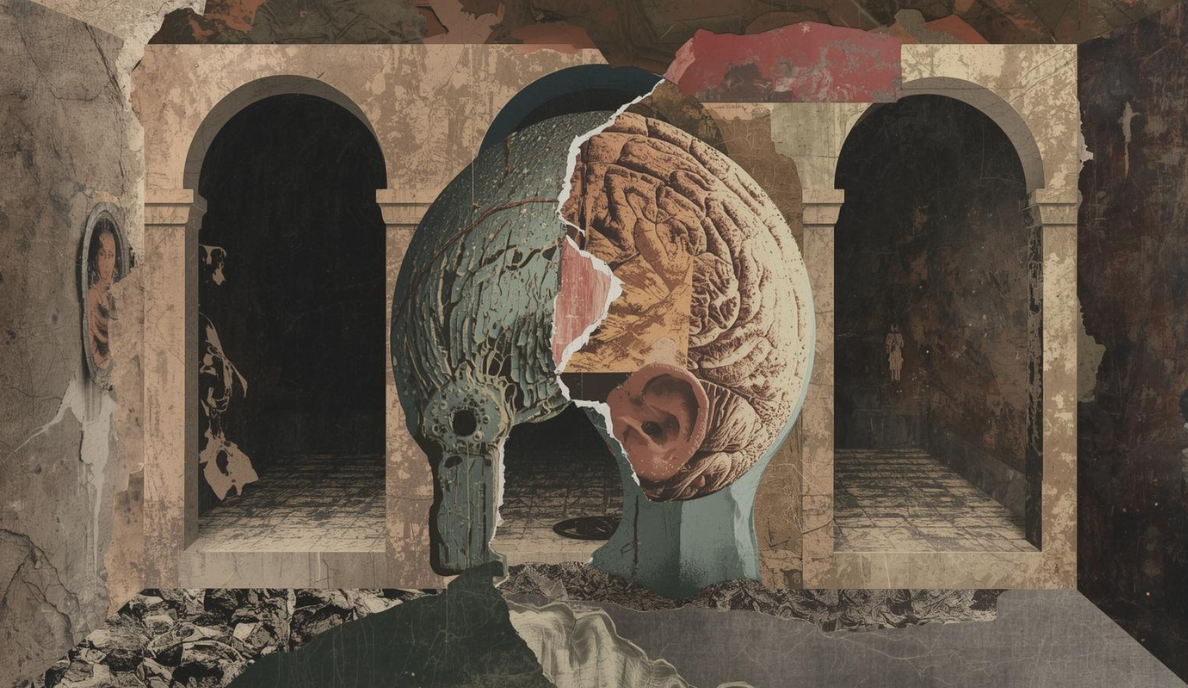
This pattern is being run by the cerebellum.
The cerebellum is responsible for storing and executing learned sequences—especially ones that involve movement, timing, and repetition. It’s what allows you to perform actions without thinking through each step. Walking, typing, driving—these all rely on the cerebellum to run smoothly without conscious effort.
Over time, behaviors like scrolling can also become encoded this way. The brain doesn’t treat them as separate decisions anymore. It treats them as a single pattern that can be triggered and executed.
This is why the behavior feels automatic. It’s not being actively decided each time—it’s being executed from a stored sequence.
Why it feels like a choice (but isn’t)
When you become aware of the behavior, it creates the illusion that you chose it. But awareness is happening after initiation.
By the time you notice, the pattern is already in motion. The cerebellum has already begun running the sequence. What you experience as “deciding to scroll” is often just recognizing that it’s already happening.
This is also why trying to control it through willpower doesn’t work. You’re attempting to interrupt something that has already been triggered and is already executing.
Why the loop doesn’t resolve (the missing layer)
The loop persists because the signal never reaches the morphogenetic field.
The morphogenetic field is the level where patterns complete, organize, and resolve. When signal reaches this level, systems recalibrate naturally. Things don’t have to be forced to stop—they stop because they’ve completed.
But when the brain is looping at the level of the cerebellum, the signal doesn’t reach that layer. It stays contained within the pattern itself. The behavior runs, repeats, and reinforces, but never fully resolves.
This is why the loop feels endless. It’s not closing—it’s recycling.
What signal distortion actually means here
When the cerebellum is running a loop like this, it distorts how input is processed. Instead of new information changing the pattern, everything gets filtered through it.
You can feel bored and still scroll. You can feel regret and still continue. You can decide not to do it and still start again later.
The signal that would normally update or stop the behavior isn’t reaching the system that’s running it.
So the pattern continues.
Why Nothing You’ve Tried Seems to Work
Most attempts to stop this behavior happen at the surface level.
You remove apps.
You set time limits.
You tell yourself you’ll be more disciplined.
These approaches assume the behavior is being created at the level of decision-making. But it isn’t. It’s being executed from a stored pattern.
So even when you interrupt it temporarily, the underlying sequence is still intact. It hasn’t been updated, replaced, or resolved. It just waits for the next cue and starts again.
This is why it keeps coming back. Not because you’re failing—but because the level you’re trying to change isn’t the level it’s running from.
What this actually means
This pattern maps to the cerebellum.
It’s not random. It’s not a lack of control. It’s an automated loop that has been encoded and reinforced over time.
As long as it’s running at that level, it will continue to repeat.
Where correction actually begins
Correction doesn’t start by trying to control the behavior.
It starts at the level where the pattern is being run.
→ [Explore the Cerebellum Collection]
⸻
You’re not trying to stop something you’re choosing.
You’re trying to interrupt something that’s already been set in motion.
And until the signal reaches the level where the pattern can actually resolve, it will keep running.

What you’ve just read is not a standalone article. It belongs to a much larger cartography devoted to the hidden architecture of human experience: the mechanisms of Amenta, the conditions of captivity, and the Gateway to Amenti.
Every article published here reveals a fragment of that architecture. But recognizing an individual mechanism is not the same as understanding the system in which it operates.
That is why I created The Living Atlas.

I’m Angel Quintana, creator of Sacred Anarchy and Mythic City, and the Cartographer behind The Living Atlas.
The Living Atlas is an ongoing investigation of Amenta’s architecture. Each investigation examines a particular Landmark, revealing how seemingly unrelated experiences, patterns, and structures belong to the same system. As an Investigator, you join me for a monthly live investigation, receive the accompanying written work, and gain access to an expanding archive of discoveries.
The purpose is not to become an expert on captivity. It is to recognize the architecture well enough to find the Gate. Become an Investigator→