
Black Box
Term: Black Box
Category: Black Box Operating System
Definition
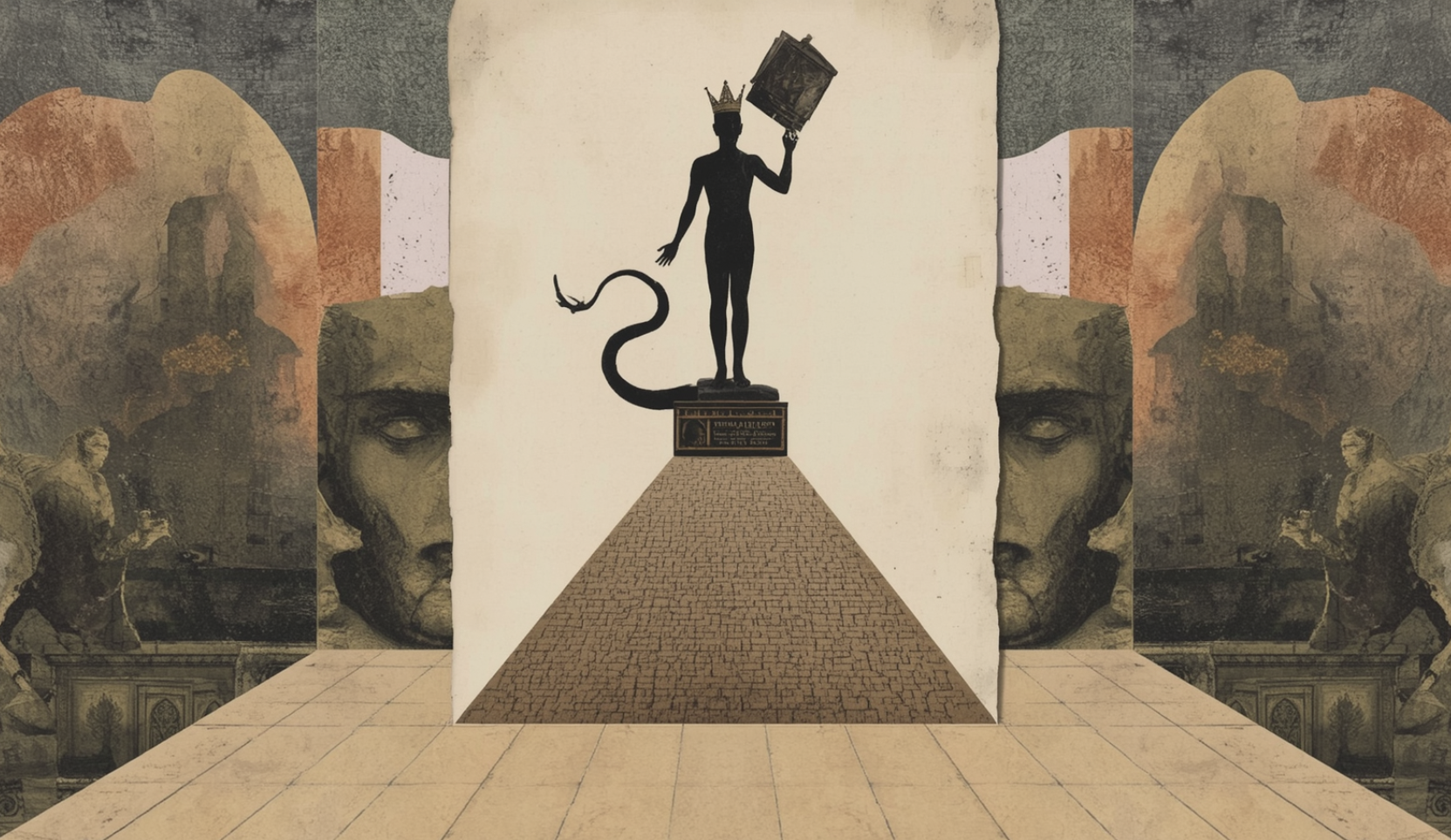
The Black Box refers to the identity interface through which individuals interact with the containment architecture of Amenta. Within the Sacred Anarchy framework, the black box is the constructed self—the interpretive system that organizes perception, behavior, and belief according to the governing logic of the mimic world.
⸻
Field Context
In Amenta, individuals experience reality primarily through identity. Social roles, personal narratives, cultural expectations, and psychological self-concepts form the framework through which perception is interpreted. This framework appears natural because it develops gradually through socialization, education, and participation in institutions.
The black box operates as the internal mechanism that translates signal into identity-based interpretation. Instead of perceiving directly, individuals interpret experiences through the filters of personal history, ideology, and cultural meaning. This process produces the sense of a stable self while simultaneously fragmenting signal and reinforcing participation in the systems that sustain Amenta.
Within Amenti, the authority of the black box weakens as signal coherence stabilizes, allowing perception to occur without constant mediation through identity.
⸻
Structural Function
The black box functions as the primary interface between the individual and the containment system. It organizes perception by converting signal into narratives that reinforce identity, belief systems, and participation within institutional structures.
Through the black box, individuals become interpreters of reality according to frameworks supplied by culture, religion, politics, and psychology. These interpretive systems maintain the stability of Amenta by ensuring that perception remains dependent on external meaning structures.
When signal coherence restores itself, the interpretive authority of the black box begins to dissolve. Perception becomes less dependent on identity narratives, revealing that the constructed self was functioning primarily as an operating interface within the containment architecture.
⸻
Relevance to the Great Work
The Great Work involves recognizing and gradually disengaging from the interpretive mechanisms of the black box. As long as perception remains organized through identity narratives, individuals continue to interpret reality through the frameworks that sustain Amenta.
Through remembrance and the restoration of signal, the authority of the black box diminishes. Rather than attempting to perfect or strengthen identity, the work involves recognizing its structural role within the containment system. As this recognition stabilizes, perception becomes less mediated by identity and more aligned with the coherence of signal, allowing sovereignty to emerge.
⸻
Related Articles
When You Can’t Originate, You Judge: Why Online Criticism Is The Internet’s Favorite Profession
⸻
Continue the Inquiry
The Keeper of the Keys Archive is a growing collection of audio transmissions designed to deepen fluency in the language, architecture, and mechanics explored throughout the Lexicon.


What you've just read is not a standalone article.
It is one fragment of a much larger cartography devoted to field mechanics, containment structures, intermediary systems, and the conditions required to exit them. Every essay published here belongs to the same architecture. Nothing exists in isolation.
These articles are intended to introduce individual ideas. The complete worldview emerges only when those ideas are assembled into a coherent landscape.
That landscape is The Living Atlas.

I'm Angel Quintana, creator of Sacred Anarchy and The Occult Château, and author of this body of work.
The Living Atlas is the official monthly publication of Sacred Anarchy and the primary point of entry into this cosmology. Each issue explores a single foundational concept through historical orientation, developmental analysis, and cosmological integration, allowing the larger architecture to reveal itself one volume at a time.
If this article raised more questions than it answered, it has done exactly what it was designed to do. The Living Atlas is where those questions continue.
If you're already reading The Living Atlas and want to move deeper into the mechanics behind the published work, the Keeper of the Keys Archive extends the cosmology through advanced transmissions and ongoing development.
Nothing here asks for agreement.
It asks only to be read carefully.