
Mythic City
Term: Mythic City
Category: System Architecture
Definition
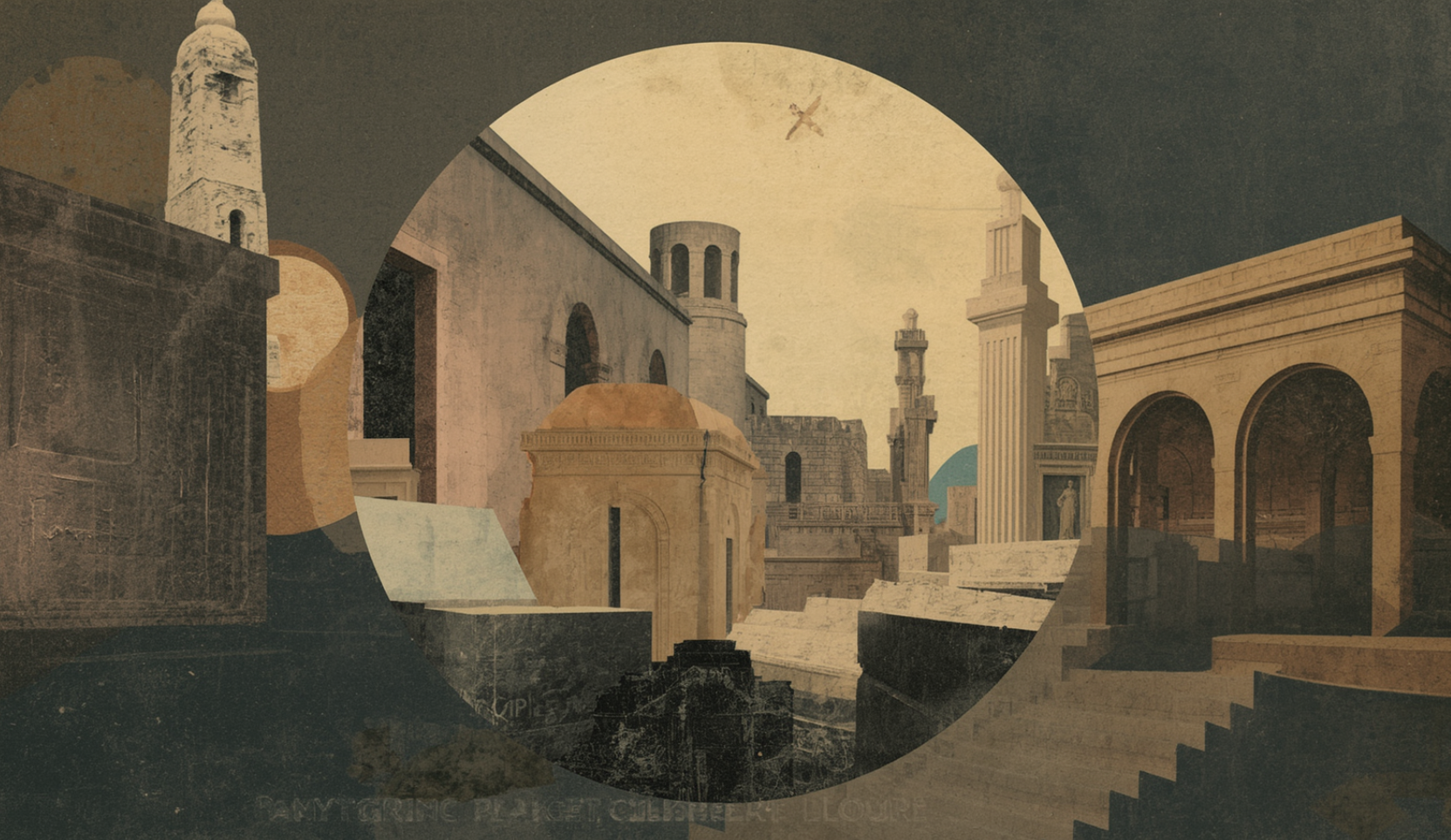
Mythic City refers to the environmental operating system of Amenti: a perceptual architecture through which signal, symbolism, atmosphere, culture, and authorship become navigable within coherent reality.
Within the Sacred Anarchy framework, Mythic City functions as the cultural and symbolic interface layer of Amenti. It organizes perception through mythology, aesthetics, art, media, architecture, scent, narrative, memory, and emotional atmosphere, allowing reality to be experienced relationally rather than recursively.
Mythic City is not a fictional city or symbolic metaphor alone. It is the perceptual environment through which coherent signal becomes culturally visible.
⸻
Field Context
Human beings do not experience reality through information alone. They experience it atmospherically, symbolically, emotionally, architecturally, and culturally.
Film, music, literature, fashion, mythology, celebrity, design, public imagery, and collective narratives all shape how perception organizes itself within civilization. These structures influence emotional orientation, symbolic meaning, identity formation, memory, desire, and participation.
Within Amenta, culture becomes recursive. Symbolism is flattened into performance, identity reinforcement, distraction, and mediated participation. People consume culture while remaining disconnected from direct perception.
Within Amenti, culture functions differently.
Symbolic expression becomes coherent rather than fragmenting. Mythology becomes orientational instead of escapist. Atmosphere restores relationship with perception rather than interrupting it. Art, architecture, media, and aesthetic expression become interfaces for coherent participation in reality.
Mythic City is the environmental layer where this relationship becomes visible.
⸻
Structural Function
Mythic City functions as the perceptual operating system of Amenti.
Like an operating system organizes interaction between user and machine, Mythic City organizes interaction between perception and reality through symbolic, emotional, cultural, and atmospheric structures.
Its districts function as specialized perceptual environments, each translating aspects of signal into navigable cultural form. Myth, scent, ritual, literature, symbolism, architecture, visual design, and emotional atmosphere all become part of the interface layer through which coherent perception operates.
Mythic City does not replace reality with symbolism. It restores direct relationship between symbolism and reality.
Through this structure, culture becomes participatory rather than performative. Symbolism becomes orientational rather than manipulative. Atmosphere becomes coherent rather than fragmenting.
Mythic City allows perception to move through reality consciously instead of recursively.
⸻
Relationship to Amenta
Mythic City is not the operating system of Amenta.
Amenta fragments perception through hierarchy, recursive thought, mediation, identity performance, and looping participation. Culture inside Amenta becomes distorted into distraction, validation systems, algorithmic reinforcement, and symbolic fragmentation.
Mythic City belongs to Amenti.
It represents the restoration of coherent symbolic participation after distortion ends. Rather than trapping perception inside recursive identity structures, it allows culture, mythology, aesthetics, and atmosphere to become navigational tools for coherent authorship.
Where Amenta mediates reality through performance, Mythic City restores direct relationship with perception.
⸻
Relevance to the Great Work
Within the Sacred Anarchy framework, Mythic City represents the return of coherent perception into culture itself.
It demonstrates that mythology is not confined to ancient stories or symbolic systems detached from life. Myth continues unfolding through art, architecture, media, emotional atmosphere, public imagery, narrative, and cultural expression.
The Great Work is not the rejection of symbolism, culture, or aesthetic life. It is the restoration of coherent relationship with them.
Through Mythic City, culture becomes observable instead of immersive. Symbolism becomes navigable instead of unconscious. Perception becomes orientational instead of recursive.
Culture stops functioning as a script to unconsciously perform and becomes a map through which coherent reality can be perceived directly.
⸻
Related Articles
You’re Not Missing a Strategy—You’re Running the Wrong Operating System
⸻
Continue the Inquiry
The Keeper of the Keys Archive is a growing collection of audio transmissions designed to deepen fluency in the language, architecture, and mechanics explored throughout the Lexicon.


What you've just read is not a standalone article.
It is one fragment of a much larger cartography devoted to field mechanics, containment structures, intermediary systems, and the conditions required to exit them. Every essay published here belongs to the same architecture. Nothing exists in isolation.
These articles are intended to introduce individual ideas. The complete worldview emerges only when those ideas are assembled into a coherent landscape.
That landscape is The Living Atlas.

I'm Angel Quintana, creator of Sacred Anarchy and The Occult Château, and author of this body of work.
The Living Atlas is the official monthly publication of Sacred Anarchy and the primary point of entry into this cosmology. Each issue explores a single foundational concept through historical orientation, developmental analysis, and cosmological integration, allowing the larger architecture to reveal itself one volume at a time.
If this article raised more questions than it answered, it has done exactly what it was designed to do. The Living Atlas is where those questions continue.
If you're already reading The Living Atlas and want to move deeper into the mechanics behind the published work, the Keeper of the Keys Archive extends the cosmology through advanced transmissions and ongoing development.
Nothing here asks for agreement.
It asks only to be read carefully.