
The Abyss
Term: The Abyss
Category: System Architecture
Definition
The Abyss refers to the threshold condition where identity structures, symbolic frameworks, and egregoric authorities lose their organizing power over perception. Within the Sacred Anarchy framework, the Abyss represents the moment when the containment architecture of Amenta can no longer stabilize the interpretive structures that once defined reality.
⸻
Field Context
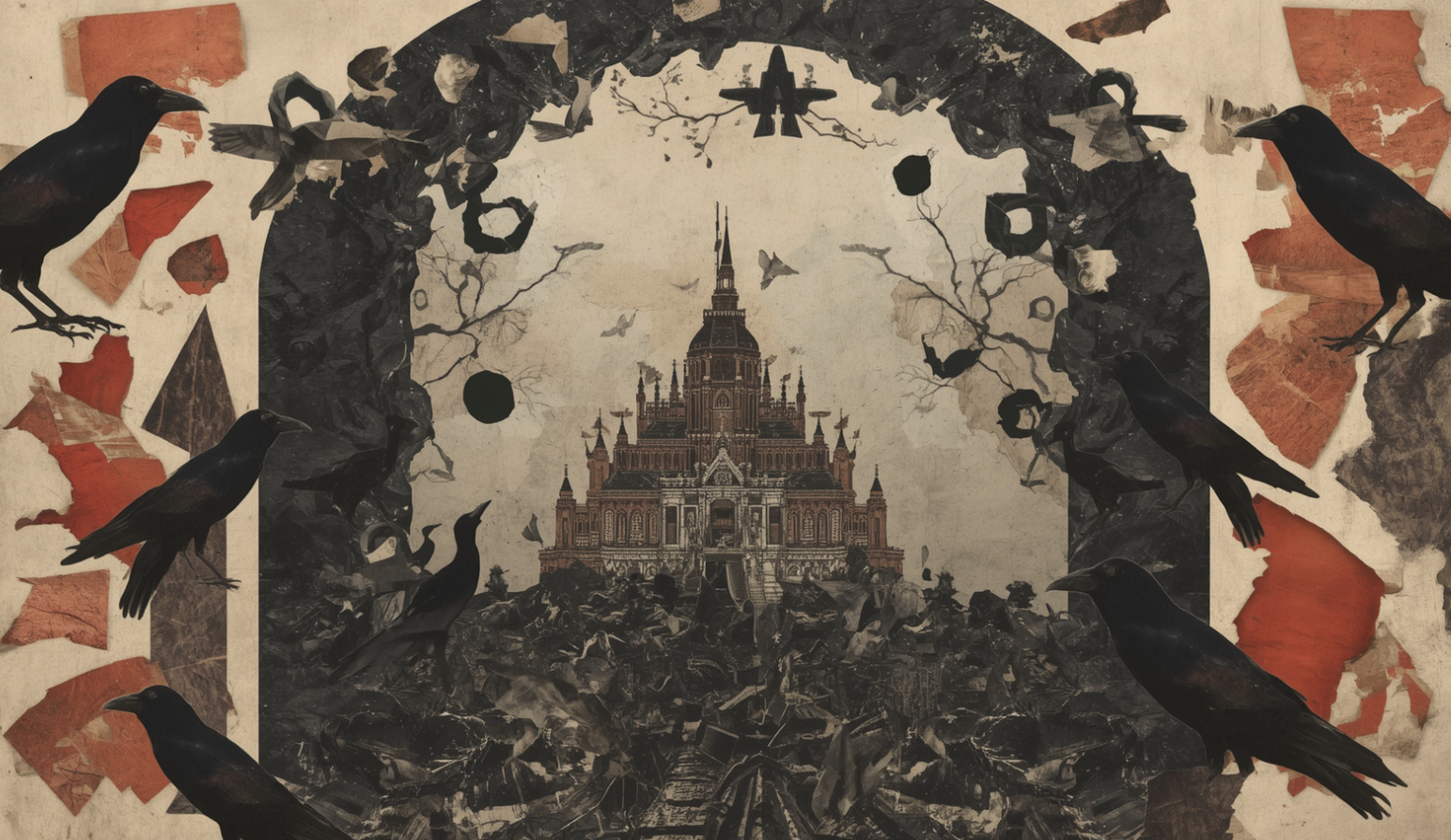
Throughout mythological and occult traditions, the Abyss is described as a dangerous or transformative passage separating ordinary perception from deeper knowledge. It is often portrayed as a void between worlds where identity, belief systems, and symbolic authorities dissolve.
Within the Sacred Anarchy framework, the Abyss represents the point where the interpretive systems of Amenta begin to fail. Identity narratives, ideological frameworks, and symbolic authorities that once organized perception no longer provide orientation.
Because identity depends on these structures for stability, the encounter with the Abyss can feel like the collapse of meaning itself. Many spiritual traditions attempt to reinterpret this threshold through new symbolic systems that restore identity in a different form.
⸻
Structural Function
The Abyss functions as a perceptual rupture within the containment architecture. When individuals begin to recognize the structural nature of identity, egregores, and the Grid, the interpretive frameworks that once governed perception can destabilize.
At this threshold, the black box interface loses its authority as the primary interpreter of reality. The symbolic systems that once provided meaning—religious narratives, spiritual hierarchies, ideological identities—can no longer fully stabilize perception.
Because the Abyss disrupts the interpretive structures of identity, many systems attempt to prevent or reinterpret the experience in ways that restore the familiar frameworks of meaning.
⸻
Relevance to the Great Work
Within the Sacred Anarchy framework, the Abyss marks the transition where identity can no longer organize perception. Rather than representing spiritual attainment, it reveals the absence of inherent authority within the symbolic systems that once governed reality.
The Great Work involves recognizing this threshold without immediately reconstructing identity through new beliefs or symbolic frameworks. As signal coherence stabilizes beyond the collapse of these systems, perception begins to reorganize according to harmonic intelligence rather than through identity interpretation.
Through this passage, sovereignty becomes possible because perception is no longer dependent on the interpretive structures that once defined meaning.
⸻
Related Articles
What Is “Crossing the Abyss”? (And What Happens When You Do)
Kundalini Awakening Explained (And What Most Teachings Miss)
What Does It Mean to Be an Initiate? (Beyond Spiritual Labels)
⸻
Continue the Inquiry
The Keeper of the Keys Archive is a growing collection of audio transmissions designed to deepen fluency in the language, architecture, and mechanics explored throughout the Lexicon.


What you've just read is not a standalone article.
It is one fragment of a much larger cartography devoted to field mechanics, containment structures, intermediary systems, and the conditions required to exit them. Every essay published here belongs to the same architecture. Nothing exists in isolation.
These articles are intended to introduce individual ideas. The complete worldview emerges only when those ideas are assembled into a coherent landscape.
That landscape is The Living Atlas.

I'm Angel Quintana, creator of Sacred Anarchy and The Occult Château, and author of this body of work.
The Living Atlas is the official monthly publication of Sacred Anarchy and the primary point of entry into this cosmology. Each issue explores a single foundational concept through historical orientation, developmental analysis, and cosmological integration, allowing the larger architecture to reveal itself one volume at a time.
If this article raised more questions than it answered, it has done exactly what it was designed to do. The Living Atlas is where those questions continue.
If you're already reading The Living Atlas and want to move deeper into the mechanics behind the published work, the Keeper of the Keys Archive extends the cosmology through advanced transmissions and ongoing development.
Nothing here asks for agreement.
It asks only to be read carefully.