
Validation
Term: Validation
Category: Cultural & Psychological Structures
Definition
Validation refers to the psychological mechanism through which individuals seek confirmation of identity, belief, or personal worth from external sources. Within the Sacred Anarchy framework, validation functions as a reinforcement loop that stabilizes identity participation inside the social architecture of Amenta.
⸻
Field Context
Modern culture runs heavily on validation systems. Social media approval, institutional recognition, ideological agreement, and peer affirmation all act as signals that reinforce whether an identity is acceptable or desirable.
Because identity depends on constant reinforcement, individuals often adjust their beliefs, behaviors, and self-presentation to maintain approval within the environments they inhabit. Spiritual communities, political movements, professional spaces, and cultural tribes all use validation mechanisms to reward alignment and discourage deviation.
What appears as encouragement or support can therefore function as a subtle pressure to remain within the narratives and roles that the system recognizes.
⸻
Structural Function
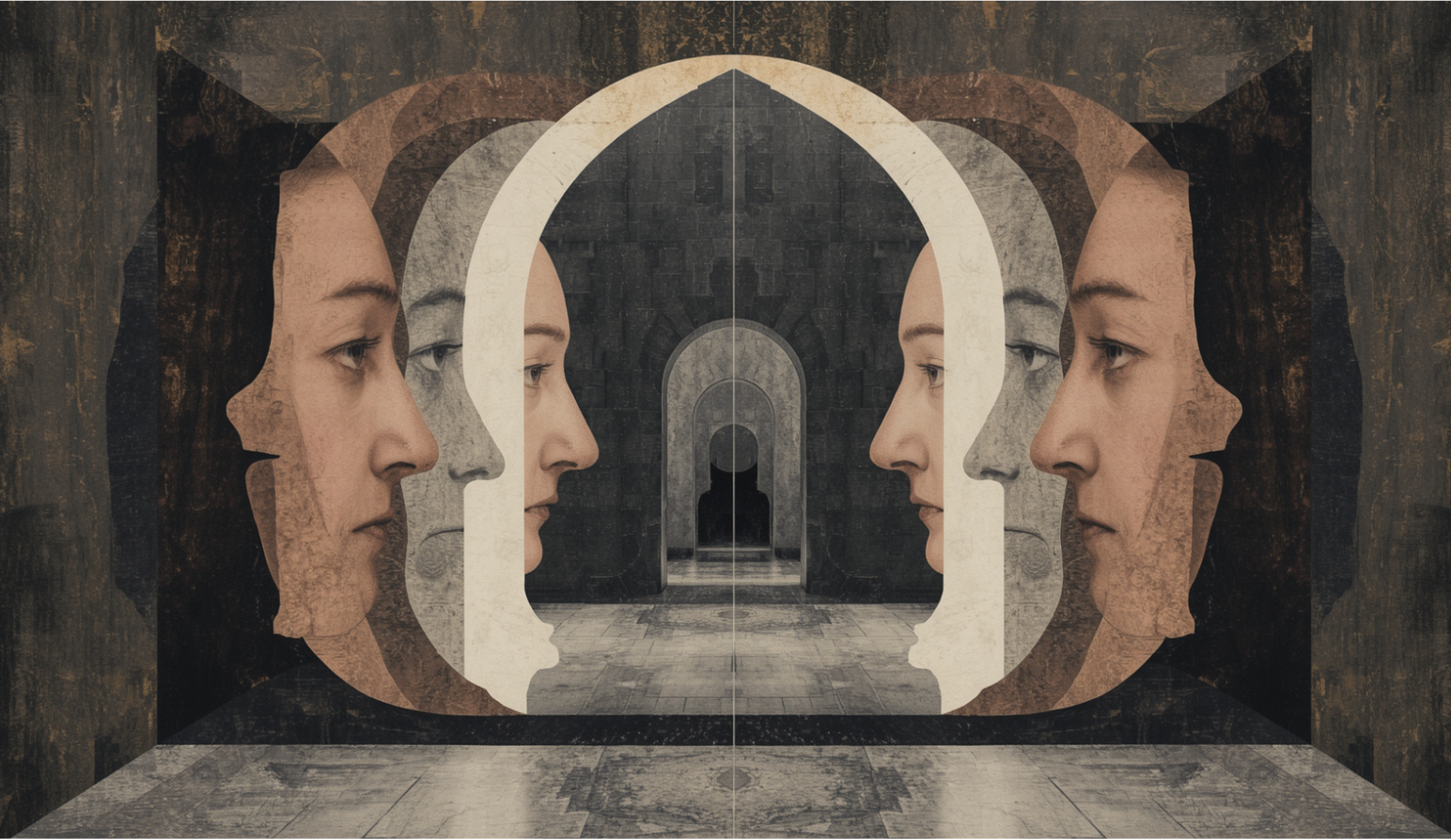
Validation operates as a social feedback loop that strengthens identity structures. When individuals receive approval, recognition, or agreement, the identity being performed becomes more stable and more deeply integrated into the cultural system that rewarded it.
This mechanism allows large systems to maintain coherence without direct enforcement. Instead of imposing control externally, the system relies on individuals to voluntarily align their behavior with the structures that provide validation.
Over time, the pursuit of validation can become a primary motivator for identity performance.
⸻
Relevance to the Great Work
Within the Sacred Anarchy framework, validation represents one of the subtle mechanisms that keeps identity structures intact. As long as meaning, belonging, and worth depend on external confirmation, individuals remain tethered to the social systems that provide it.
The Great Work gradually weakens this dependency by exposing how identity and validation reinforce each other. As signal coherence stabilizes, the need for external confirmation begins to lose its authority, allowing perception to operate independently of the approval structures that once defined participation.
Through this shift, sovereignty becomes possible because perception is no longer organized around the need to be recognized.
⸻
Related Articles
Why You Need Validation to Feel Good
⸻
Continue the Inquiry
The Keeper of the Keys Archive is a growing collection of audio transmissions designed to deepen fluency in the language, architecture, and mechanics explored throughout the Lexicon.

What you've just read is not a standalone article.
It is one fragment of a much larger cartography devoted to field mechanics, containment structures, intermediary systems, and the conditions required to exit them. Every essay published here belongs to the same architecture. Nothing exists in isolation.
These articles are intended to introduce individual ideas. The complete worldview emerges only when those ideas are assembled into a coherent landscape.
That landscape is The Living Atlas.

I'm Angel Quintana, creator of Sacred Anarchy and The Occult Château, and author of this body of work.
The Living Atlas is the official monthly publication of Sacred Anarchy and the primary point of entry into this cosmology. Each issue explores a single foundational concept through historical orientation, developmental analysis, and cosmological integration, allowing the larger architecture to reveal itself one volume at a time.
If this article raised more questions than it answered, it has done exactly what it was designed to do. The Living Atlas is where those questions continue.
If you're already reading The Living Atlas and want to move deeper into the mechanics behind the published work, the Keeper of the Keys Archive extends the cosmology through advanced transmissions and ongoing development.
Nothing here asks for agreement.
It asks only to be read carefully.