
Intellectual Obesity: Knowing More, Seeing Less
More Knowledge Does Not Guarantee More Seeing
Modern culture has made learning easier than at any other point in history. A single afternoon can include a podcast on psychology, a documentary about history, a newsletter on business, an interview with a neuroscientist, a book summary, and a conversation with artificial intelligence. Information is no longer difficult to obtain. The assumption that naturally follows is that greater access to knowledge should produce greater understanding.
That assumption deserves closer examination. Many people continue adding to their libraries, saving articles they intend to read, subscribing to new podcasts, collecting online courses, and following experts across every imaginable subject. They become increasingly informed, yet often describe feeling no clearer about their own lives. The quantity of knowledge grows while perception appears strangely unchanged.
This is the Accumulation Illusion. It is the belief that wisdom naturally emerges from gathering enough information. More books. More teachers. More frameworks. More explanations. The next insight is always expected to arrive with the next source. Learning becomes measured by what has been collected rather than by what has fundamentally changed in the way reality is perceived.
The Black Box operating system quietly reinforces this condition because accumulation feels remarkably similar to progress. Every new piece of information creates the satisfaction of moving forward, even when nothing about participation has actually changed. Amenta is not fed by knowledge itself. It is fed when the pursuit of knowing quietly replaces the difficult work of seeing.
Learning Becomes Consumption
When Knowledge Becomes Entertainment
Learning once demanded long periods of reflection, experimentation, and direct participation. Today, it is increasingly experienced as consumption. Articles are saved for later. Podcasts play throughout the day. Books pile higher on the nightstand. Another course is purchased before the previous one has been completed. New ideas arrive so quickly that there is little time to discover what any of them actually changed.
None of these activities are the problem. Reading expands perspective. Listening introduces unfamiliar ideas. Great teachers can transform the course of a life. The maintenance condition appears when consuming knowledge becomes satisfying enough that it begins replacing the slower work of integrating it. Finishing a book starts feeling like growth. Watching an interview feels like progress. Saving another article creates the impression that something meaningful has already occurred.
This pattern is reinforced everywhere. Social media rewards constant educational content. Podcasts promise life-changing conversations every week. Newsletters deliver fresh insights every morning. Artificial intelligence answers questions instantly. There is always another voice to hear, another framework to understand, another explanation to collect. The mind remains continually occupied while participation remains remarkably unchanged.
The Black Box operating system thrives within this arrangement because consumption creates the emotional experience of movement without requiring transformation. The appearance of learning quietly begins replacing transformation itself. Knowledge continues accumulating while Signal waits for something far more demanding than another explanation: direct recognition.

Recognition Stops Growing
When Information Outpaces Perception
One of the most revealing features of Intellectual Obesity is that knowledge and perception do not always grow together. A person may speak fluently about attachment styles yet fail to recognize them shaping their own relationships. They can explain confirmation bias while defending their own assumptions without hesitation. They understand burnout, projection, emotional regulation, and communication patterns, yet continue repeating the very dynamics they can describe in remarkable detail.
This pattern appears far beyond psychology. An entrepreneur studies leadership for years while remaining unable to see how fear influences every important decision. A health enthusiast can explain nutrition, inflammation, sleep, and exercise while consistently ignoring the habits undermining their own well-being. Someone spends years reading about creativity without noticing how often they postpone creating. Information expands. Recognition remains almost exactly where it was.
The problem is not a lack of intelligence. It is that information can be accumulated much faster than perception can mature. Facts are acquired in hours. Recognition often develops only through participation. It asks something different than memory. It asks whether what has been learned has become visible in the way a person encounters reality.
The Black Box operating system quietly rewards accumulation because accumulation is easy to measure. Books completed. Podcasts finished. Courses purchased. Notes highlighted. Progress appears obvious. Recognition offers no such scoreboard. It often arrives silently, in the middle of an ordinary conversation or familiar situation, when something that has always been present is finally seen for the first time.
This is where Signal begins separating itself from information. Signal does not ask how much you know. It asks what has become unmistakably visible because your participation has changed. Knowing may continue expanding indefinitely. Seeing only expands when reality is encountered differently than before.
The Black Box Rewards Accumulation
Why More Always Feels Necessary
The Black Box operating system rarely discourages learning. It encourages more of it. Another book. Another podcast. Another framework. Another expert. Another breakthrough. This makes the condition difficult to recognize because learning appears unquestionably virtuous. Who could criticize curiosity? Who could object to education? Yet the issue is not learning itself. The issue is what learning begins to postpone.
Endless learning often creates a moving threshold. A person will start the business after one more strategy book. They will write the essay after one more research phase. They will have the difficult conversation after one more relationship podcast. They will change their health after one more protocol. They will create after they understand creativity more completely. Participation is always near, but never now.
This is how accumulation becomes maintenance. Every new source creates the feeling that the missing piece may finally arrive. The next course will clarify the path. The next teacher will reveal the method. The next expert will explain the pattern. The next framework will make everything click. The horizon keeps moving because the Black Box does not need people to remain ignorant. It only needs them to believe they are not ready yet.
Amenta is fed when knowledge becomes preparation without arrival. The learner remains busy, informed, and intellectually stimulated, but direct participation is repeatedly delayed. The mind grows crowded with material while life waits for embodiment. In this condition, more information does not produce more freedom. It produces a more sophisticated reason to keep waiting.
Intellectual Obesity
When the Mind Consumes More Than It Can Integrate
The body has natural limits. Beyond a certain point, consuming more food no longer creates nourishment. It creates congestion. The problem is not eating. It is taking in more than the body can meaningfully use. The same pattern can emerge in the mind. Information continues arriving long after perception has stopped expanding. Knowledge accumulates faster than it can be integrated into lived experience.
This condition is easy to overlook because it often looks like intelligence. Someone can recommend dozens of books, summarize countless podcasts, quote famous thinkers, and move effortlessly between psychology, business, philosophy, spirituality, and neuroscience. Conversations become filled with references and concepts. Yet when life presents a familiar challenge, they often respond exactly as they did before. The library has grown. Participation has not.
Integration asks something accumulation never can. It asks whether what has been learned has become embodied. Has the relationship changed? Has the business changed? Has the way conflict is approached changed? Has perception itself changed? Without that movement, new information simply settles beside old information, creating a larger collection rather than a deeper understanding.
This is Intellectual Obesity. Not the absence of knowledge, but its excess. Not ignorance, but overconsumption. The Black Box operating system quietly rewards this condition because accumulation is endless. There is always more to know, more to collect, more to understand. Signal asks a different question. Not How much have you learned? but What has become unmistakably visible because you learned it?
Seeing Requires Less Than Knowing
Recognition Cannot Be Accumulated
Many of the most important moments of recognition arrive with almost no new information at all. A person suddenly realizes why the same relationship pattern has followed them for years. An entrepreneur sees that the obstacle in the business was never the market, but the way they had been participating. A parent understands something about their child that no book could have explained because it was revealed through direct relationship rather than another theory. Nothing new was added. Something already present became visible.
This is why recognition cannot be collected the way information can. Ten books cannot guarantee what a single clear moment of perception can reveal. A hundred hours of podcasts cannot substitute for recognizing the pattern unfolding in the conversation you are having right now. Information may prepare the ground, but recognition is always immediate. It is the moment reality reorganizes because something that was previously invisible can no longer be unseen.
The Black Box operating system encourages people to believe that every answer exists somewhere outside themselves, waiting in the next framework, the next teacher, or the next explanation. Signal participates differently. It does not ask you to accumulate another layer of knowledge. It asks whether what is already present has finally become visible. The deepest transformations often begin not when something new is learned, but when something familiar is recognized for the first time.
This is the distinction Intellectual Obesity obscures. Knowledge can accumulate indefinitely. Recognition cannot. It arrives one realization at a time, changing the way participation unfolds from that moment forward. Seeing requires less than knowing because reality has never depended upon how much information you possess. It depends upon what you are finally able to recognize standing directly in front of you.
How Much of What You Know Have You Actually Seen?
The question has never been whether knowledge has value. It does. Every generation depends upon the discoveries, insights, and experience of those who came before it. The investigation has asked something different. What happens when the accumulation of knowledge begins replacing the development of perception?
The question is no longer:
How much do I know?
It becomes:
How much has changed the way I participate?
These are profoundly different measurements. One can be answered by counting books, courses, podcasts, articles, and ideas. The other can only be answered by looking at the way reality is now encountered. Information may fill the mind. Recognition changes the relationship between the person and the world.
Intellectual Obesity feeds Amenta through perception replaced by accumulation. The Black Box operating system rarely keeps people ignorant. It often keeps them informed enough to mistake knowledge for vision. The deepest transformation has never belonged to the person who knows the most. It belongs to the one who can no longer look at reality without seeing what had been there all along.
Related Articles
• Knowledge Is Not Free: Why Intelligence Requires Exchange
• The Great Work Is Not Self-Mastery — It’s the Gate Out of Amenta
• The Self-Help Hamster Wheel: Why Personal Development Never Truly Fixes Anything
Glossary
Field Tools

What you've just read is not a standalone article.
It is one fragment of a much larger cartography devoted to field mechanics, containment structures, intermediary systems, and the conditions required to exit them. Every essay published here belongs to the same architecture. Nothing exists in isolation.
These articles are intended to introduce individual ideas. The complete worldview emerges only when those ideas are assembled into a coherent landscape.
That landscape is The Living Atlas.
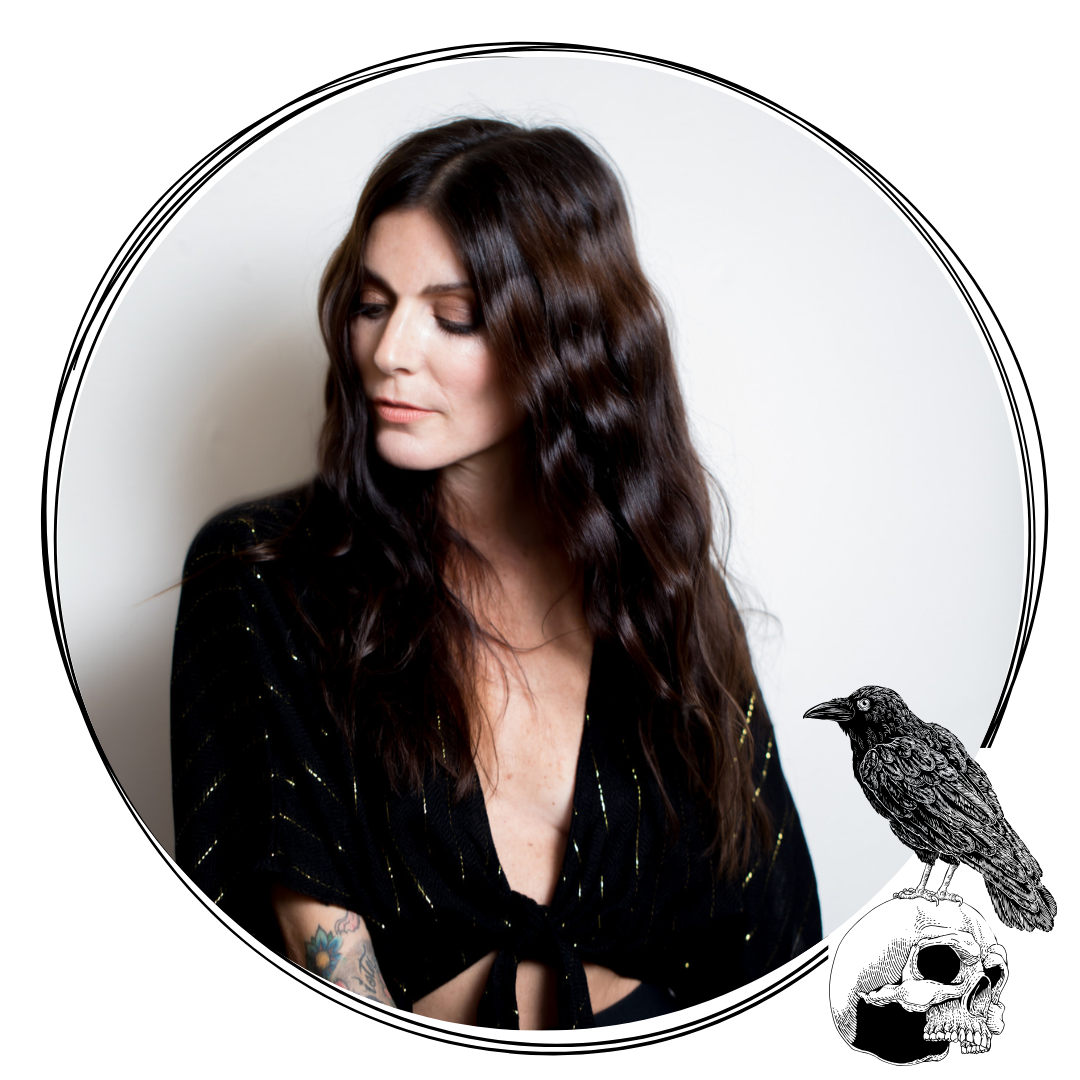
I'm Angel Quintana, creator of Sacred Anarchy and The Occult Château, and author of this body of work.
The Living Atlas is the official monthly publication of Sacred Anarchy and the primary point of entry into this cosmology. Each issue explores a single foundational concept through historical orientation, developmental analysis, and cosmological integration, allowing the larger architecture to reveal itself one volume at a time.
If this article raised more questions than it answered, it has done exactly what it was designed to do. The Living Atlas is where those questions continue.
If you're already reading The Living Atlas and want to move deeper into the mechanics behind the published work, the Keeper of the Keys Archive extends the cosmology through advanced transmissions and ongoing development.
Nothing here asks for agreement.
It asks only to be read carefully.