
The Hidden Engine of Amenta
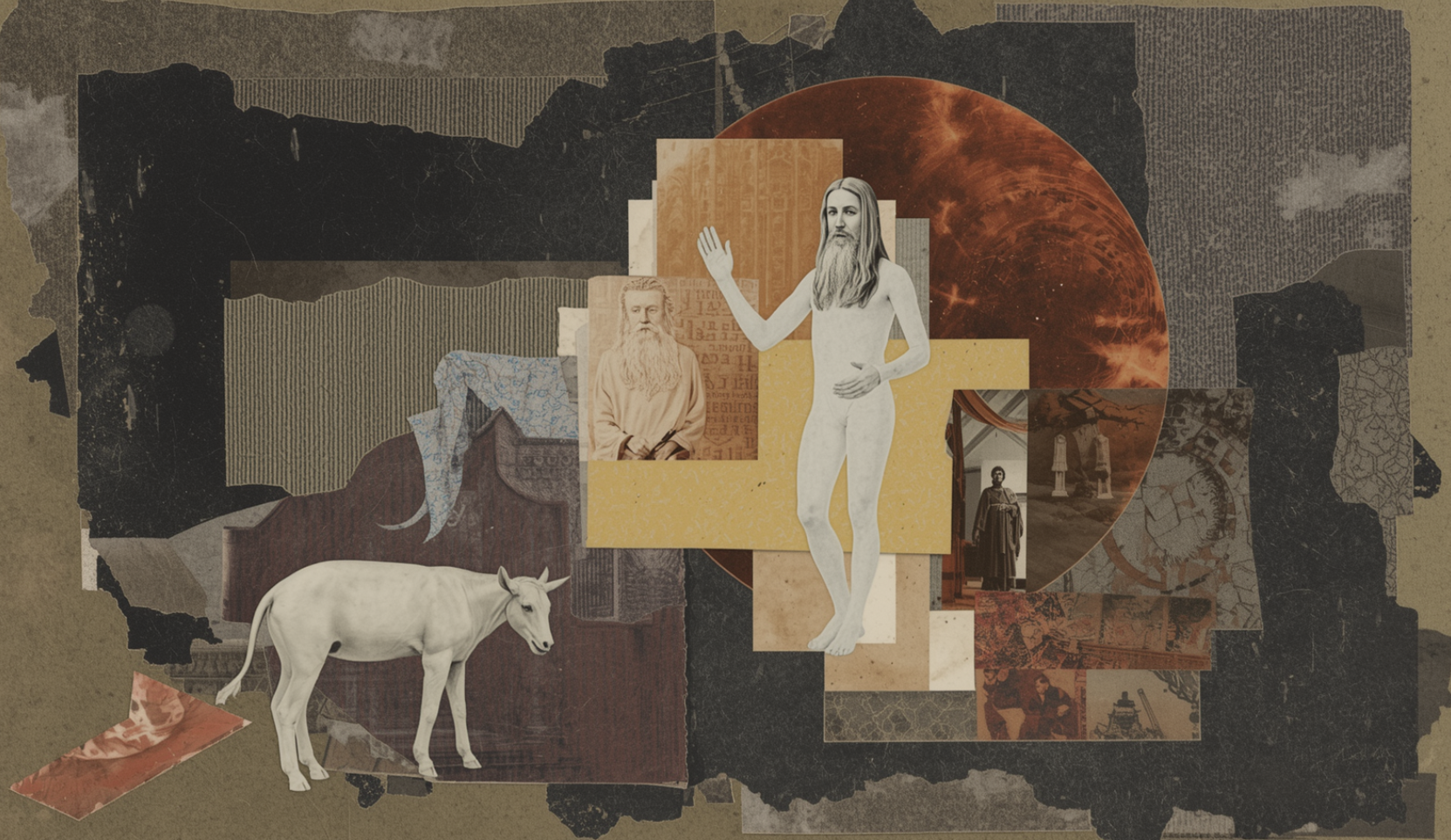
Every enduring system must solve the same problem: how to preserve itself while its individual parts are continually replaced. Forests lose trees, rivers never contain the same water twice, and every cell in the human body is eventually renewed. Businesses outlive their founders. Governments survive changing leaders. Civilizations endure long after the generations that built them have disappeared. Continuity, it seems, does not depend on permanence. It depends on something deeper—an underlying architecture capable of maintaining itself despite constant change.
For as long as human beings have reflected on their own existence, they have asked what, if anything, survives death. Religions have spoken of resurrection. Eastern traditions have described reincarnation. Mystery schools have proposed cycles of initiation, purification, and return. Although these traditions often disagree about what happens after death, they are all attempting to explain the same phenomenon: how continuity persists when individual lives come to an end.
Perhaps the more revealing question is not whether reincarnation exists, but why a system would require it in the first place. If consciousness repeatedly returns to the same environment, then reincarnation may not simply be a spiritual process or a moral lesson. It may serve a structural function. It may be one of the mechanisms through which an environment preserves itself across generations, ensuring that while individuals come and go, the larger architecture remains intact.
This article explores reincarnation through that lens. Rather than treating it as a doctrine to defend or reject, it examines reincarnation as a mechanism of continuity. Within the Sacred Anarchy framework, Amenta is understood as the environment in which human experience unfolds, while the Black Box is the operating system that organizes and perpetuates that environment. From this perspective, reincarnation is not merely a question of what happens after death. It becomes part of a larger question: what keeps Amenta alive?
The Law of Continuity
Every enduring system is confronted by the same requirement. It must remain coherent even as its individual components continually change. Forests lose trees without ceasing to be forests. Languages evolve while remaining recognizable across generations. Economies expand and contract without disappearing each time participants enter or leave. Change is not an interruption of the system. It is one of the conditions that allows the system to continue.
The same principle appears across every level of organization. Institutions replace their members. Corporations hire new employees. Governments survive elections and transitions of power. Cultures gradually adopt new customs while preserving recognizable identities. At every scale, continuity proves more important than permanence. Individual components are temporary. The organizing structure persists.
An operating system functions according to the same principle. Files are created and deleted. Programs are installed and removed. Hardware eventually fails and is replaced. Yet the operating system continues organizing activity because its continuity does not depend upon preserving every individual part. It depends upon preserving the relationships that allow the system to function.
This distinction is easy to overlook because attention is often drawn toward the changing pieces rather than the architecture that organizes them. We naturally observe births, deaths, beginnings, and endings. Less obvious is the continuity quietly maintained beneath those changes. Systems rarely preserve themselves by preventing change. They preserve themselves by remaining organized while change unfolds.
The Sacred Anarchy framework approaches Amenta in the same way. If Amenta functions as an operating system rather than merely a collection of unrelated experiences, then it must solve the same problem every enduring system solves. It must preserve continuity despite the continual replacement of its individual participants.
That leads to a larger question. If civilizations, ecosystems, institutions, and operating systems all possess mechanisms that preserve their continuity, what mechanism allows Amenta itself to continue across generations?

The Oldest Question
Some questions disappear as knowledge advances. Others remain. Across continents, cultures, religions, and thousands of years of recorded history, one question has persisted with remarkable consistency. What happens after death? Every civilization eventually asks it, regardless of how differently they answer it.
The remarkable observation is not that humanity reached a single conclusion. Quite the opposite. The proposed answers range from reincarnation and resurrection to ancestral return, paradise, dissolution, or an immortal soul. Yet beneath those differences lies an extraordinary constant. The question itself refuses to disappear.
Why has no civilization ever stopped asking it? If death simply marked a complete ending, it would seem reasonable to expect the question to fade over time. Instead, each generation inherits it anew, treating it not as a curiosity but as one of the deepest mysteries of existence.
Perhaps the persistence of the question reveals something important. Human beings repeatedly encounter the intuition that continuity extends beyond the visible lifespan of the individual. Whether that intuition reflects an objective reality is not the concern of this article. The phenomenon worth observing is that it continually arises across history, even among cultures separated by geography, language, and worldview.
Within the Sacred Anarchy framework, that recurring question becomes structurally significant. Rather than beginning with an answer, the Atlas begins by examining why the question itself has endured. If continuity is one of the defining characteristics of every enduring system, then it becomes reasonable to ask whether humanity has been attempting to describe the same continuity all along through different symbolic languages.
“The question is not whether life continues after death. The deeper question is what requires life to continue at all.”
Angel Quintana
The Architecture of Repetition
One of the defining characteristics of Amenta is repetition. Patterns rarely disappear simply because they have been recognized. They reorganize, adapt, and return through different circumstances while preserving the same underlying structure. Throughout the Atlas, repetition is not treated as coincidence or personal failure. It is understood as one of the operating principles through which Amenta maintains continuity.
This recurring architecture can be observed at every scale of experience. Thoughts repeat. Habits repeat. Emotional reactions repeat. Relationships often unfold according to familiar dynamics despite involving different people. Families transmit recognizable patterns across generations. Institutions preserve long-standing structures even as their members change. Economies move through cycles. Civilizations rise, decline, and reorganize. History continually echoes itself without becoming an exact copy of what came before.
What repeats is not always the visible form. More often, it is the organizing pattern beneath the form that persists. New faces occupy old roles. Different circumstances produce familiar outcomes. The appearance changes while the architecture remains remarkably stable. Continuity is preserved through recurring organization rather than through permanent individual components.
Viewed from this perspective, repetition is no longer an isolated psychological phenomenon. It becomes a structural characteristic of the operating system itself. The same logic that preserves continuity within thoughts, behaviors, relationships, institutions, and civilizations appears to function across increasingly larger scales of participation.
This raises a natural question. If repetition organizes every observable level of Amenta, why would embodiment be the lone exception? If continuity expresses itself through recurring patterns everywhere else, it becomes reasonable to ask whether individual lives also participate in a larger continuity mechanism rather than existing as isolated events.
The Largest Continuity Loop
If continuity is one of the defining characteristics of every enduring system, and repetition is one of Amenta’s governing mechanics, then a larger question naturally emerges. What mechanism allows that continuity to extend beyond a single lifetime? Within the Sacred Anarchy framework, reincarnation is understood as the largest continuity loop operating within Amenta. It is not presented as proof, nor as a doctrine requiring belief. It is examined as the structural mechanism through which the operating system preserves itself across generations.
This shifts the discussion away from morality and toward mechanics. Rather than asking whether reincarnation is a reward, a punishment, the result of karma, or a path of spiritual evolution, the Atlas asks a simpler question. What function would reincarnation serve if Amenta were an operating system? Every enduring system requires a mechanism that preserves continuity despite the continual replacement of its individual components. Why would Amenta be any different?
Within this framework, reincarnation is not primarily about the continuation of the individual. It is about the continuation of the architecture. Individual lives begin and end. Participants enter and leave. Yet the operating system remains intact because continuity extends beyond any single embodiment. Reincarnation becomes the largest expression of the same organizing principle already observed throughout the Atlas. Patterns continue. Structures continue. The system continues.
Viewed this way, reincarnation is no longer an isolated spiritual concept. It becomes the macro-scale continuation of the very mechanics already visible in recurring thoughts, relationships, institutions, civilizations, and history itself. The question is no longer simply whether life continues after death. The deeper question becomes whether Amenta possesses a continuity mechanism large enough to preserve its own architecture across lifetimes.
“If repetition is the architecture of Amenta, reincarnation becomes its largest continuity mechanism.”
Angel Quintana
Why Amenta Needs the Loop
If Amenta functions as an operating system, then continuity is not optional. Every participant eventually dies. Every generation eventually passes. Without a mechanism that continually replaces its participants while preserving its organizing structure, Amenta would eventually come to an end. No operating system can survive if every component disappears without replacement.
Viewed from this perspective, reincarnation is not primarily about the journey of the individual. It is about the survival of the system itself. The loop allows participation to continue even though individual lives do not. New people enter. Old people leave. Yet the architecture remains recognizable because the underlying patterns continue organizing those who enter it.
This continuity extends far beyond individual identity. Hierarchies continue. Conditioning continues. Institutions continue. Distortions continue. Conflicts continue. Unfinished patterns continue appearing in new forms. The faces change, but the organization remains remarkably familiar. The operating system preserves itself by continually reproducing compatible participation.
This leads to a profound distinction. Amenta does not require the same individuals to survive. It only requires individuals who remain compatible with its architecture. As long as new participants continue organizing perception through the same structures, the operating system remains intact. The replacement of individuals is not a threat to Amenta. It is one of the ways Amenta preserves itself.
Within this framework, reincarnation becomes the largest continuity mechanism operating inside Amenta. It is not presented as a reward, a punishment, or proof of spiritual advancement. It is the mechanism through which the operating system continually renews itself. Without the loop, continuity breaks. Without continuity, Amenta cannot persist. The question is no longer whether reincarnation exists. The more revealing question is whether Amenta could exist without it.
Memory Is Not Continuity
One of the first objections to reincarnation is also one of the most revealing. If previous lives existed, why doesn’t everyone remember them? The question assumes that continuity depends upon conscious memory. Within this framework, that assumption deserves closer examination.
Very few systems preserve continuity by requiring every participant to remember every previous state. An operating system does not require each new process to remember every process that came before it. A civilization does not require each generation to remember every individual who previously lived. Continuity is maintained because the organizing structure persists, not because every participant possesses complete recall.
The same distinction applies here. Memory and continuity are not identical phenomena. Conscious recollection is one form of memory, but continuity can exist without autobiographical awareness. The absence of remembered past lives does not, by itself, demonstrate the absence of continuity. It may simply indicate that continuity operates through something other than conscious recall.
Within the Sacred Anarchy framework, what continues is not necessarily a collection of remembered experiences. What continues are the organizing structures that maintain participation within Amenta. Patterns continue. Conditioning continues. Compatibility continues. The architecture preserves itself even when conscious memory does not.
This distinction becomes increasingly important throughout the remainder of the framework. Understanding the difference between memory and continuity opens the door to deeper questions about Dreamtime, the Black Box, the soul, and the mechanisms through which participation itself is maintained.
“Amenta does not preserve individuals. It preserves the conditions that continually produce compatible participants.”
Angel Quintana
Why the Goal Is Often Misunderstood
Once reincarnation is viewed as a continuity mechanism rather than simply a spiritual belief, the conversation changes. Much of the discussion surrounding reincarnation has traditionally focused on the fate of the individual. How do I escape the cycle? How do I achieve immortality? How do I reach the point where I no longer return? These questions assume the individual is the primary subject of the investigation.
Within the Sacred Anarchy framework, a different question comes first. Before asking how to leave the loop, it becomes necessary to understand why the loop exists at all. If Amenta depends upon continuity to preserve itself, then the more fundamental question is not how to escape repetition. It is what continually produces it.
That shift in perspective changes the purpose of the inquiry. Rather than treating reincarnation as a personal reward, punishment, or spiritual milestone, it becomes part of a much larger architecture. The emphasis moves away from surviving death and toward understanding the mechanism that allows repetition to persist across generations.
Only after the continuity mechanism is understood does the question of leaving it become meaningful. Otherwise, the search for escape risks becoming another activity taking place entirely within the operating system itself. Before asking how to exit the loop, it is necessary to understand what keeps the loop running.
What Is The Great Work
Within the Sacred Anarchy framework, the Great Work is often misunderstood. It is not undertaken to achieve immortality, accumulate spiritual merit, perfect the personality, or earn an escape from reincarnation. Those goals remain organized around the continuation of identity rather than the architecture that gives identity its place within Amenta.
The Great Work has a different purpose. It is the gradual removal of the Black Box, the adaptive operating system that intercepts signal and organizes perception through hierarchy, distortion, and recursive participation. As that architecture loses its authority, perception is no longer organized around the conditions that sustain Amenta. The work is not directed toward becoming someone new. It is directed toward removing what made participation in the operating system possible in the first place.
As the Black Box dissolves, structural compatibility with Amenta naturally begins to diminish. This is not achieved through effort, belief, or spiritual performance. It is the consequence of restoring direct participation in signal. The more coherent perception becomes, the less the organizing structures of Amenta are able to recruit it into their continuity.
The mechanics of that transition belong to later discussions. For now, one distinction is enough. If reincarnation functions as the continuity mechanism through which Amenta preserves itself, then the Great Work is not an attempt to defeat the loop by force. It is the gradual removal of the architecture that makes participation in the loop possible.
“Every civilization has asked what happens after death. Few have asked what continues the world that makes death meaningful in the first place.”
Angel Quintana
Every enduring operating system depends upon continuity. Remove the mechanism that preserves continuity, and the system eventually disappears. Throughout history, humanity has attempted to explain what survives death through many different traditions and symbols. Within the Sacred Anarchy framework, reincarnation is approached as the largest continuity mechanism through which Amenta preserves its own existence across generations.
This perspective shifts the discussion away from morality and toward mechanics. Reincarnation is not presented as a reward for virtue, a punishment for failure, or evidence of spiritual achievement. It is understood as the mechanism that continually renews participation within Amenta, allowing the operating system to persist even as every individual life eventually comes to an end.
Viewed this way, the familiar question begins to change. Rather than asking whether life continues after death, a deeper inquiry emerges. If continuity is preserved across lifetimes, what exactly is being carried forward? Is it memory? Identity? The individual? Or is it the architecture itself that continually reproduces the conditions required for its own survival?
The answer to that question changes everything. If what persists is not simply the individual but the operating system that continually organizes participation, then the purpose of the Great Work is no longer understood as escaping death. It becomes the gradual removal of the architecture that makes recursive participation in Amenta possible in the first place.
Start Here
If you're new to this work, start with these transmissions:
• Crossing the Abyss: The Frequency Shift that Ends the Game
• Amenta: The Inversion Grid You Mistook for Reality
• Why You Were Never Meant to Remember: The Primordial Waters of Nun
Glossary
• Signal
Field Tools

What you've just read is not a standalone article.
It is one fragment of a much larger cartography devoted to field mechanics, containment structures, intermediary systems, and the conditions required to exit them. Every essay published here belongs to the same architecture. Nothing exists in isolation.
These articles are intended to introduce individual ideas. The complete worldview emerges only when those ideas are assembled into a coherent landscape.
That landscape is The Living Atlas.

I'm Angel Quintana, creator of Sacred Anarchy and The Occult Château, and author of this body of work.
The Living Atlas is the official monthly publication of Sacred Anarchy and the primary point of entry into this cosmology. Each issue explores a single foundational concept through historical orientation, developmental analysis, and cosmological integration, allowing the larger architecture to reveal itself one volume at a time.
If this article raised more questions than it answered, it has done exactly what it was designed to do. The Living Atlas is where those questions continue.
If you're already reading The Living Atlas and want to move deeper into the mechanics behind the published work, the Keeper of the Keys Archive extends the cosmology through advanced transmissions and ongoing development.
Nothing here asks for agreement.
It asks only to be read carefully.