
The Mimic Grid: The Hidden Pressure to Fit In
Pressure to fit in appears so ordinary that it is rarely questioned. It shows up in childhood, education, careers, relationships, families, religion, and nearly every institution people participate in throughout their lives. Society typically explains this pressure through culture, personality, trauma, conditioning, or the human desire to belong. These explanations describe where the pressure appears, but they do not explain why compatibility becomes one of the most persistent organizing forces across every level of civilization. The remarkable consistency of the pattern suggests something deeper than individual psychology may be operating.
Within the Sacred Anarchy framework, the pressure to fit in is not understood primarily as an emotional or psychological phenomenon. It is structural. Amenta, the operating system that organizes perception through the Black Box, depends upon structural compatibility in order to preserve its continuity. Individuals come and go, but the operating system persists by continually producing participants capable of executing within its architecture. Compatibility is therefore not incidental to Amenta. It is one of the conditions through which Amenta maintains itself across generations.
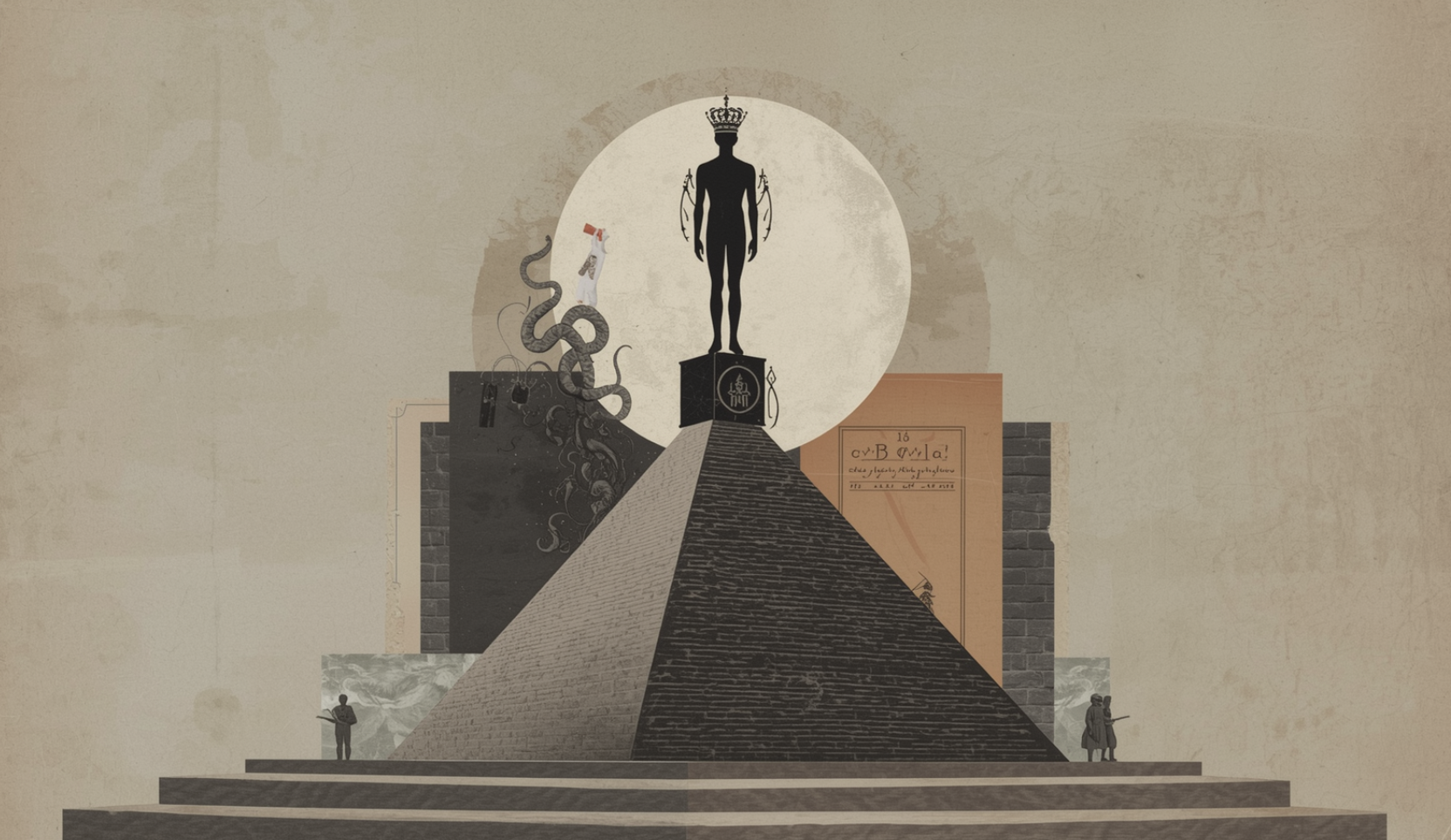
This compatibility is maintained through what the Sacred Anarchy framework calls the Mimic Grid. The Mimic Grid is the meta-egregore of the Black Box operating system, the distributed architecture through which Amenta continually measures, rewards, and restores structural compatibility. It does not function as a single institution, ideology, or authority. Instead, it operates across countless systems simultaneously, reinforcing the same organizing principles through different forms. Family, education, business, politics, religion, media, and culture each become local expressions of a larger compatibility network that continually encourages participation within the operating system.
This article explores why the pressure to fit in exists, how the Mimic Grid operates through the Black Box, and why increasing awareness of that pressure often marks one of the first observable signs of structural incompatibility. What feels like a personal struggle to belong may, in fact, be the operating system continually asking a different question altogether:
Can you remain compatible?
“The Mimic Grid does not force conformity. It makes compatibility feel rewarding and incompatibility feel expensive.”
Angel Quintana
Why Compatibility Feels Necessary
Compatibility rarely feels like conformity at first. It usually feels like survival, belonging, maturity, intelligence, or common sense. A child learns which behaviors earn approval and which create punishment. A student learns which answers receive praise and which invite correction. An employee learns which tone, pace, language, and priorities make them appear competent. A family member learns what version of themselves keeps the peace. Long before anyone consciously decides to fit in, compatibility has already been taught as the condition for being accepted.
This is why the pressure can feel so difficult to question. Compatibility is attached to nearly everything people are told they need in order to live a successful life. Belonging requires it. Approval rewards it. Safety often appears to depend upon it. Identity forms around it. Employment demands it. Education trains it. Relationships frequently preserve it. Religion sanctifies it. Institutions formalize it. Culture normalizes it. The message is repeated so consistently that compatibility begins to feel less like an adaptation and more like reality itself.
Every major institution reinforces this pattern in its own language. Schools call it achievement. Workplaces call it professionalism. Families call it respect. Religions call it devotion. Governments call it citizenship. Social groups call it belonging. Markets call it value. Each system rewards the individual who can understand its expectations, reproduce its signals, and behave in ways that preserve the structure already in place. The terms differ, but the demand remains the same. Become recognizable to the system, and the system will make room for you.
This does not mean all forms of compatibility are meaningless or harmful. Human life does require cooperation, shared language, mutual recognition, and some degree of social coordination. The issue is not that people adapt. The issue is that adaptation becomes so total it is mistaken for identity. The person no longer simply learns how to function inside a system. They begin to organize themselves around what the system rewards, until compatibility feels indistinguishable from who they are.
This is the point where ordinary experience begins to reveal a deeper mechanism. If nearly every human system rewards compatibility, the pattern cannot be explained only through personal insecurity or the desire to belong. Something larger is being preserved. The question is not why individuals want acceptance. That is easy to understand. The more important question is why so many systems reward compatibility with such remarkable consistency.
What Is The Mimic Grid
Within the Sacred Anarchy framework, the architecture responsible for maintaining structural compatibility is called the Mimic Grid. The Mimic Grid is the distributed architecture through which Amenta continually measures, rewards, and restores structural compatibility. It is the meta-egregore of the Black Box operating system, meaning it does not exist as a single belief system, institution, or authority. Rather, it is the organizing field through which the many egregores of Amenta cooperate to preserve the operating system itself. Wherever compatibility is rewarded and structural deviation is discouraged, the Mimic Grid is already operating.
For this reason, the Mimic Grid should not be understood as a conspiracy, a hidden organization, or an external force manipulating humanity from behind the scenes. It does not require centralized control because it functions as an operating condition rather than an institution. Individuals participate in it regardless of whether they believe in it, oppose it, or remain completely unaware of it. Families reinforce it. Schools reinforce it. Businesses reinforce it. Governments reinforce it. Religions reinforce it. Communities reinforce it. Each believes it is pursuing its own goals while simultaneously contributing to the preservation of a much larger pattern.
Its function is remarkably simple. Maintain compatibility. Everything else serves that objective.
Hierarchy establishes positions people learn to occupy. Performance determines who is rewarded. Validation teaches which behaviors deserve approval. Comparison continually measures individuals against one another. Identity stabilizes participation by making compatible behavior feel personal. Repetition transforms adaptation into habit. Over time, these mechanisms become so familiar that they no longer appear as mechanisms at all. They simply become what life feels like.
The Mimic Grid therefore does not force conformity through constant coercion. It operates far more efficiently than that. It continually associates compatibility with safety, belonging, opportunity, recognition, and stability while allowing incompatibility to become increasingly expensive. The costs may appear as social rejection, financial insecurity, professional limitation, family conflict, ridicule, isolation, or the persistent feeling that something is wrong with you. The operating system rarely needs to demand conformity directly because the architecture itself continually teaches which forms of participation are rewarded and which gradually become more difficult to sustain.
This is what makes the Mimic Grid one of Amenta’s most effective organizing structures. It does not primarily control behavior.
It organizes incentives.
As those incentives accumulate across a lifetime, compatibility begins to feel voluntary even when it is being continuously shaped by the operating system. The individual experiences themselves as making independent choices while the Mimic Grid quietly preserves the structural conditions required for Amenta to continue reproducing itself through every generation.
“The pressure to fit in is not primarily psychological. It is the operating system restoring compatibility.”
Angel Quintana
Compatibility Pressure
The Mimic Grid does not preserve compatibility through ideas alone. It continuously generates what the Sacred Anarchy framework calls Compatibility Pressure. Compatibility Pressure is the continual force exerted by the Mimic Grid to restore structural compatibility between the individual and Amenta. It is the invisible pressure that encourages participation within the operating system while discouraging anything that begins moving beyond its established patterns. Although people often experience this pressure emotionally, psychologically, or socially, those experiences are expressions of a deeper structural process already taking place.
This distinction changes the way discomfort is interpreted. The pressure people experience is not primarily emotional.
It is structural.
It does not arise because the operating system wants individuals to become happy, fulfilled, authentic, or psychologically healthy. Operating systems are not organized around personal fulfillment. They are organized around continuity. Compatibility Pressure exists because Amenta continually restores the conditions necessary for its own preservation. The individual experiences that restoration as internal conflict, external resistance, uncertainty, self-doubt, or the persistent feeling that something is pulling them back toward what is familiar.
This is why the pressure often becomes strongest precisely when someone begins moving outside the patterns rewarded by the Mimic Grid. A person begins questioning inherited beliefs. They stop pursuing goals that once defined success. They refuse a role that previously earned approval. They create something unfamiliar instead of repeating what already works. They withdraw from performances that once secured belonging. Almost immediately, pressure begins to accumulate. It may appear as fear, guilt, anxiety, isolation, financial uncertainty, criticism, or the feeling that returning to the previous pattern would make life easier.
Within the Sacred Anarchy framework, these responses are understood differently.
The pressure isn’t trying to make you happy. It’s trying to make you executable inside Amenta.
That single distinction reorganizes the entire phenomenon. What appears to be personal weakness may instead be the operating system attempting to restore compatibility. The pressure is not asking whether an action is true, coherent, or original. It is continually asking whether that action can still be successfully integrated into the architecture that preserves Amenta.
This also explains why Compatibility Pressure often intensifies as structural incompatibility increases. The further perception begins moving beyond the organizing patterns of the Mimic Grid, the more the operating system attempts to restore familiar forms of participation. The goal is not punishment. The goal is stabilization. Like any operating system encountering incompatible code, Amenta continually attempts to reestablish the conditions under which normal execution can continue. What many people interpret as resistance from life may therefore represent something much more specific.
The operating system is attempting to make them compatible again.
“The Black Box Operating System is not asking, ‘Who are you?’ It is asking, ‘Can you execute?’”
Angel Quintana
Why Self-Improvement Often Strengthens Compatibility
When Compatibility Pressure becomes uncomfortable, the natural response is to search for relief. People pursue healing, therapy, self-improvement, optimization, manifestation, spirituality, mindset training, biohacking, or countless other practices intended to reduce suffering and create a more fulfilling life. Many of these approaches offer genuine benefits. They can improve emotional regulation, physical health, relationships, resilience, self-awareness, and overall quality of life. The Sacred Anarchy framework does not dismiss these outcomes. The deeper question lies somewhere else entirely.
Compatible with what?
That question is rarely asked because improvement itself is almost universally assumed to be the goal. Yet every form of improvement occurs within a particular operating system. Becoming calmer, more productive, more emotionally regulated, more spiritually informed, or more successful does not, by itself, reveal whether the operating system organizing those improvements has fundamentally changed. It may simply indicate that the individual has become increasingly capable of executing within the same architecture that was already producing Compatibility Pressure.
This helps explain why so many people experience meaningful progress while simultaneously feeling that something essential remains unresolved. They become healthier but continue repeating familiar patterns. They become more self-aware but remain organized around the same identity. They develop greater emotional intelligence while continuing to seek validation from the same structures. They accumulate spiritual knowledge without leaving the architecture that interprets spirituality through achievement, hierarchy, or comparison. Improvement occurs. Compatibility becomes stronger. The underlying operating system remains remarkably stable.
Within the Sacred Anarchy framework, this is not viewed as failure. It is viewed as adaptation. The operating system has become more refined, more resilient, and more sophisticated without becoming structurally different. In many cases, self-improvement reduces the discomfort produced by Compatibility Pressure precisely because it increases compatibility with the system generating that pressure. The person functions more effectively. The operating system functions more smoothly. The relationship between them becomes more stable.
This distinction helps illuminate many of the framework’s central mechanics. The Kundabuffer can absorb profound insight without allowing it to reorganize perception. The Phantom Commander continually directs adaptation toward restoring compatibility whenever stability is threatened. The Dark Night of the Soul often begins when these adaptive strategies no longer produce lasting coherence. The Great Work therefore serves a fundamentally different purpose than self-improvement. It is not undertaken to become a more effective participant within Amenta. It gradually removes the adaptive architecture that made participation within Amenta possible in the first place.
This is why the Sacred Anarchy framework asks a different question.
Not:
How can I function better?
But:
What operating system am I becoming better at functioning within?
That single question separates adaptation from transformation.
When Compatibility Begins to Fail
For many people, there comes a point when something subtle begins to change. The strategies that once made life feel stable no longer produce the same results. The pressure to perform becomes increasingly exhausting. Success loses much of its ability to satisfy. Belonging begins requiring more self-suppression than genuine participation. Conversations feel rehearsed. Relationships become increasingly performative. Institutions that once provided certainty begin feeling strangely artificial. Nothing necessarily appears wrong from the outside, yet maintaining ordinary participation requires progressively greater effort.
This shift is often misunderstood because it closely resembles burnout, dissatisfaction, disillusionment, or the desire for a different lifestyle. While those experiences may certainly accompany it, they do not fully explain what is occurring. The individual is not simply becoming tired of a particular job, relationship, community, or belief system. The discomfort begins appearing across multiple areas of life simultaneously. Changing careers provides only temporary relief. Finding a new community eventually reproduces familiar patterns. Even meaningful achievements begin feeling strangely disconnected from what once made them worthwhile.
Perhaps the most noticeable change occurs within identity itself. Roles that once felt natural begin feeling like performances. The individual can still execute them, but they no longer experience them as authentic expressions of participation. The effort required to remain recognizable within the expectations of family, work, institutions, or social groups steadily increases. What once happened almost automatically now feels consciously maintained. The pressure has not disappeared. The cost of maintaining compatibility has simply become more visible.
Within the Sacred Anarchy framework, this condition is called Structural Incompatibility.
Structural Incompatibility occurs when the operating system can no longer maintain stable compatibility between an individual’s organizing structure and Amenta.
This is not presented as a diagnosis, a personality type, or a mystical status. It is an observable operating condition. The individual remains capable of participating within Amenta, but doing so requires increasing amounts of adaptation, performance, and self-modification. The operating system continues attempting to restore compatibility while the individual’s organizing structure becomes progressively less able to stabilize within the patterns the Mimic Grid continually reinforces.
Seen from this perspective, the growing discomfort begins to make sense. The pressure has not become stronger because the individual is failing. It has become more noticeable because compatibility itself is becoming more difficult to maintain. The operating system continues asking for the same forms of participation it has always required. The difference is that those forms of participation no longer organize the individual with the same stability they once did.
This is one of the first observable signs that the relationship between the individual and Amenta is beginning to change. The operating system continues attempting to restore compatibility.
It simply becomes less successful at doing so.
“Structural Incompatibility begins when remaining compatible requires more performance than participation.”
Angel Quintana
How the Black Box Preserves Compatibility
The Mimic Grid does not influence individuals directly. It operates through the Black Box. Understanding the relationship between these two structures is essential because they perform different functions within the operating system. The Mimic Grid generates Compatibility Pressure. The Black Box interprets that pressure. Identity then adapts behavior in response to the interpretation. When that behavior restores compatibility, participation within Amenta continues and the Mimic Grid is quietly reinforced. What appears to be a series of personal decisions is, in reality, a recursive operating process continually preserving the conditions required for Amenta to sustain itself.
The sequence can be understood as a continuous loop.
The Mimic Grid generates Compatibility Pressure.
↓
The Black Box interprets that pressure.
↓
Identity adapts behavior.
↓
Compatibility is rewarded.
↓
Participation continues.
↓
The Mimic Grid is reinforced.
Each stage supports the next. No single component maintains the operating system alone. Their interaction continually restores the structural conditions through which Amenta reproduces itself.
This distinction clarifies several misunderstandings. The Black Box does not create Compatibility Pressure. It receives and interprets it. Likewise, identity does not invent compatibility. Identity develops as the adaptive response to the pressures already being interpreted through the Black Box. The individual experiences these adaptations as personal preferences, reasonable decisions, responsible behavior, or simply the way life works. Rarely does the process feel imposed because the operating system has already translated structural pressure into thoughts, emotions, motivations, and choices that appear entirely personal.
Hierarchy strengthens this loop by rewarding recognizable forms of participation. Validation confirms those adaptations. Comparison continually measures how successfully they are being maintained. Repetition gradually transforms them into habits. Over time, the operating system no longer requires conscious effort to preserve itself because compatibility has become embodied as identity. The person is no longer merely participating within the system. The system has become the primary organizer of participation itself.
This is why the Mimic Grid is best understood as a meta-egregore rather than a single egregore. It does not compete with hierarchy, performance, validation, identity, or comparison. It organizes them into one recursive architecture. Each reinforces the others. Together they continually restore compatibility between the individual and Amenta, allowing the operating system to preserve itself without requiring centralized control or conscious coordination.
Once this recursive loop becomes visible, the experience of Compatibility Pressure begins to change. What once appeared to be isolated emotional struggles or personal shortcomings starts revealing itself as the operation of an integrated system. The pressure was never occurring in isolation. It was one expression of the larger architecture through which Amenta continually maintains its own continuity.
“The Mimic Grid is most powerful when its pressure feels like your own desire.”
Angel Quintana
The Pressure Was Never About You
One of the most significant shifts within the Sacred Anarchy framework occurs when the pressure to fit in is no longer interpreted as a personal problem. For much of life, people naturally assume the pressure is about them. They believe they need greater confidence, stronger boundaries, better communication, more healing, deeper spirituality, or a clearer sense of purpose. Although these efforts may produce meaningful changes, they often leave one question unanswered. Why does the pressure continually return, even after so much work has been done?
The answer becomes clearer once the function of the operating system is understood. Amenta is not organized around helping individuals become authentic. It is organized around preserving structural continuity. The Mimic Grid therefore asks a fundamentally different question than most people imagine.
It is not asking:
Who are you?
It is asking:
Can you execute?
Those questions produce entirely different worlds.
The first seeks authorship.
The second seeks compatibility.
From the perspective of the operating system, originality is not inherently valuable. Coherence is not inherently valuable. Authenticity is not inherently valuable. Those qualities become meaningful only if they remain compatible with the architecture preserving Amenta. This is why someone may achieve remarkable success, receive widespread recognition, heal longstanding emotional wounds, deepen spiritually, or become exceptionally self-aware while still feeling the quiet pressure to continue adapting. The operating system does not evaluate whether the individual has become more fully themselves. It evaluates whether participation remains structurally compatible.
Seen this way, Compatibility Pressure begins to reveal its true purpose. It was never attempting to help the individual discover their authentic nature. It was continually restoring the conditions required for stable participation within the operating system. Every reward, every expectation, every incentive, and every adaptation served that larger objective. The pressure persisted because authenticity was never its goal.
Compatibility was.
Recognizing this distinction changes the meaning of the pressure itself. What once appeared to be a deeply personal struggle begins revealing itself as an operating condition shared by everyone participating within Amenta. The question is no longer whether the pressure exists.
The question becomes whether it is still organizing you.
“The first sign the operating system is losing its authority is not that the pressure disappears. It is that you finally recognize where the pressure came from.”
Angel Quintana
The First Sign of Structural Incompatibility
The Mimic Grid is most effective when it remains invisible. As long as Compatibility Pressure is experienced as personal inadequacy, lack of confidence, insufficient healing, or the need for greater self-improvement, the operating system continues functioning without drawing attention to itself. The pressure feels natural because it has been translated into personal thoughts, emotions, ambitions, fears, and desires. The individual experiences the effects while rarely perceiving the architecture producing them.
One of the first observable signs that this architecture is beginning to lose its authority is therefore not bliss, certainty, or permanent peace. It is increasing awareness of Compatibility Pressure itself. What once appeared to be an intensely personal struggle gradually begins revealing itself as a structural mechanism. The individual starts recognizing patterns that previously felt invisible. The pressure to perform. The need for approval. The fear of standing apart. The quiet pull toward familiar forms of participation. None of these necessarily disappear. They simply become visible as operating conditions rather than unquestioned reality.
That recognition changes something fundamental. Once a mechanism becomes visible, it can no longer organize perception in quite the same unconscious way. The Mimic Grid continues generating Compatibility Pressure. The Black Box continues interpreting it. Identity continues responding to it. Yet another possibility has entered awareness. The individual can now distinguish between the pressure itself and the assumption that the pressure must always be obeyed. That distinction marks the beginning of a completely different relationship with the operating system.
Recognition does not complete the Great Work. It does not dissolve the Black Box. It does not eliminate Compatibility Pressure, nor does it complete Crossing the Abyss. Those are deeper structural processes explored elsewhere within the Sacred Anarchy framework. What recognition accomplishes is equally important. It marks the beginning of Structural Incompatibility. The operating system is no longer organizing perception with the same unquestioned authority because its mechanisms have become visible.
The first step toward leaving an operating system is rarely learning something new.
It is recognizing that what you believed was your own desire may have been the operating system asking one question all along:
Can you remain compatible?
Related Articles
• Why You Feel Disconnected From Your Origin
• What Is “Crossing the Abyss?”
• The Roadmap Out of Hell Was Hidden. Until Now.
Glossary
• Signal
• You Were Never Meant to Be Human
• The Parasite That Hijacked Your Signal

What you've just read is not a standalone article.
It is one fragment of a much larger cartography devoted to field mechanics, containment structures, intermediary systems, and the conditions required to exit them. Every essay published here belongs to the same architecture. Nothing exists in isolation.
These articles are intended to introduce individual ideas. The complete worldview emerges only when those ideas are assembled into a coherent landscape.
That landscape is The Living Atlas.

I'm Angel Quintana, creator of Sacred Anarchy and The Occult Château, and author of this body of work.
The Living Atlas is the official monthly publication of Sacred Anarchy and the primary point of entry into this cosmology. Each issue explores a single foundational concept through historical orientation, developmental analysis, and cosmological integration, allowing the larger architecture to reveal itself one volume at a time.
If this article raised more questions than it answered, it has done exactly what it was designed to do. The Living Atlas is where those questions continue.
If you're already reading The Living Atlas and want to move deeper into the mechanics behind the published work, the Keeper of the Keys Archive extends the cosmology through advanced transmissions and ongoing development.
Nothing here asks for agreement.
It asks only to be read carefully.