

How to Stop Intrusive Thoughts by Breaking Repetitive Thought Patterns
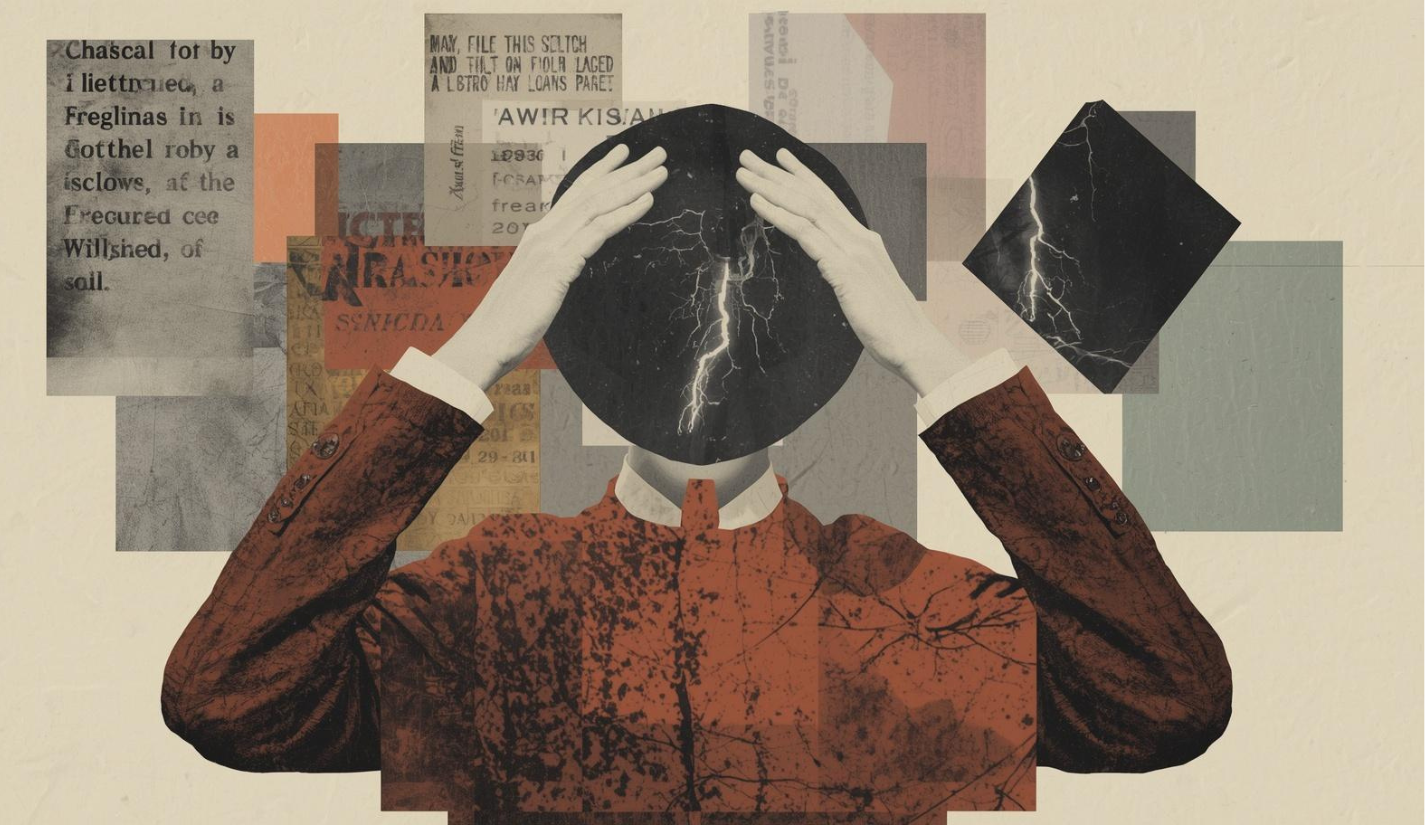
Intrusive thoughts aren’t just “unwanted.” That word is too soft for what actually happens. They don’t pass through, you get caught in them. The same type of thought shows up again and again, sometimes with slightly different wording, but it carries the same tone, the same urgency, the same pull. You try to ignore it, but it doesn’t fade. You try to think through it, and it multiplies. You try to replace it with something more rational, and it comes back later, often stronger, like it’s been waiting for the opening.
What makes this worse is that it creates the feeling that something is wrong with you. Like your mind is turning against you, or like you’re not in control of your own thinking. But if that were true, the thoughts would be chaotic, completely unpredictable. They’re not. They follow patterns. They repeat themes. They show up in familiar moments. They escalate in the same way. Which means this isn’t randomness. It’s consistency without your permission.
You’ve likely had the moment where it finally quiets down and then, hours or days later, the exact same thought returns as if nothing ever resolved.
And that’s where most explanations fall apart. Because they treat intrusive thoughts as if they’re being generated in real time—like something you’re actively creating and failing to manage. So the solutions stay at that level: regulate your nervous system, reframe the thought, redirect your attention, calm the reaction. But none of that actually stops the loop. It might soften it temporarily, but it doesn’t prevent it from coming back. And over time, that creates a second layer of frustration: you’re doing what you’re supposed to do, and it still isn’t resolving.
At a certain point, the real question isn’t “how do I control my thoughts?” It’s why the same ones keep returning at all, especially when you’re not choosing them, not agreeing with them, and not benefiting from them. Because something that repeats without your consent, maintains its shape, and strengthens with attention isn’t behaving like normal thought. It’s behaving like a pattern that already exists and is continuing to run.
Where Intrusive Thoughts Actually Come From
Intrusive thoughts are not just thoughts. They’re the surface expression of a disruption in how your internal signal moves and resolves.
Signal, in its clean form, is direct. It doesn’t loop, it doesn’t negotiate, and it doesn’t need to repeat itself to be understood. It moves, lands, and completes. That’s what clarity actually feels like—not perfection, not certainty, but completion. There’s no residue, no compulsion to keep revisiting the same thing from slightly different angles.
When that process is disrupted, signal doesn’t complete. It gets caught in a partial state: repeating, cycling, re-triggering itself. The mind then picks up that incomplete pattern and renders it as thought. But what you’re experiencing isn’t fresh thinking; it’s a looped sequence that hasn’t been able to resolve.
This is why engaging with intrusive thoughts tends to make them worse. Not because you’re weak, or because you’re “feeding” them in a psychological sense, but because attention gives the pattern continuity. You’re not solving it; you’re staying inside it. Analyzing it, resisting it, or trying to override it all happen within the loop, so the structure that’s repeating never actually breaks.
That’s also why the content of the thought often doesn’t matter. You can disprove it, rationalize it, or see that it’s exaggerated, and it still comes back. Because the issue isn’t the meaning of the thought; it’s the fact that the pattern generating it is still active.
This explains something most approaches can’t: why repetition continues even when awareness is present. You can see the pattern clearly and still be pulled back into it. You can know it doesn’t make sense and still experience it as if it does. That contradiction only exists if what you’re dealing with isn’t being generated in the moment, but is instead being replayed from a structure that hasn’t been interrupted.
Which means the goal isn’t to manage the thoughts better.
It’s to stop the pattern from continuing to run.
And that requires something different than control, suppression, or reframing.
Larvae and Why Regulating the Nervous System Doesn’t Resolve The Issue
Most people try to solve this at the level of symptoms—calming the thought, managing the feeling, working through the pattern as if it just needs more attention to finally resolve. But you’ve likely already seen that some patterns don’t respond to that. They don’t complete, they don’t resolve, and they don’t disappear once you understand them.
Instead, they repeat.
Not loosely, but with precision. The same structure, the same tone, the same internal pressure. Even when you disengage, even when you gain clarity, even when you know exactly what’s happening, the pattern can return as if nothing changed. That kind of persistence isn’t passive—it’s maintained. This is where the term larvae becomes useful.
Larvae are parasitic formations that continue to run because they draw continuity from engagement, reaction, and emotional charge. They are not thoughts you’re actively producing, even though they feel like they are. They are patterns that have stabilized enough to repeat themselves. This is why insight alone doesn’t stop them.
You can recognize the pattern completely and still feel it continue. You can understand it, name it, even predict it—and it still replays, because the structure generating it hasn’t been interrupted. It simply cycles again. Which means the goal isn’t to process it more or manage it better.
It’s to stop the pattern from continuing to feed on your attention long enough for it to collapse.
Recommended Apothecary Tool
ROSEMARY — Collapses Mimic Thoughtforms
Disrupt looping patterns at the source
Related Symptoms
Racing Thoughts: Why Your Mind Feels So Loud (And What to Do About It)
How to Stop a Negative Thought Spiral
Glossary
• Mimicry
Frequently Asked Questions
What causes intrusive thoughts?
Intrusive thoughts aren’t random. They follow patterns—same themes, same tone, same internal pressure. What you’re experiencing isn’t spontaneous thinking, it’s a loop that’s already in motion and continuing to repeat.
Why do intrusive thoughts keep happening?
Because the pattern hasn’t been interrupted. Attention keeps you inside the loop—whether you’re analyzing it, resisting it, or trying to fix it. The repetition continues not because it’s meaningful, but because it’s still active.
How can intrusive thoughts be shifted naturally?
Not by managing the thoughts themselves, but by interrupting the pattern that’s repeating them. When the loop loses continuity, it stops replaying.

What you've just read is not a standalone article.
It is one fragment of a much larger cartography devoted to field mechanics, containment structures, intermediary systems, and the conditions required to exit them. Every essay published here belongs to the same architecture. Nothing exists in isolation.
These articles are intended to introduce individual ideas. The complete worldview emerges only when those ideas are assembled into a coherent landscape.
That landscape is The Living Atlas.

I'm Angel Quintana, creator of Sacred Anarchy and The Occult Château, and author of this body of work.
The Living Atlas is the official monthly publication of Sacred Anarchy and the primary point of entry into this cosmology. Each issue explores a single foundational concept through historical orientation, developmental analysis, and cosmological integration, allowing the larger architecture to reveal itself one volume at a time.
If this article raised more questions than it answered, it has done exactly what it was designed to do. The Living Atlas is where those questions continue.
If you're already reading The Living Atlas and want to move deeper into the mechanics behind the published work, the Keeper of the Keys Archive extends the cosmology through advanced transmissions and ongoing development.
Nothing here asks for agreement.
It asks only to be read carefully.