

The Deeper Truth Behind Repeating Thoughts, Behaviors, and Patterns
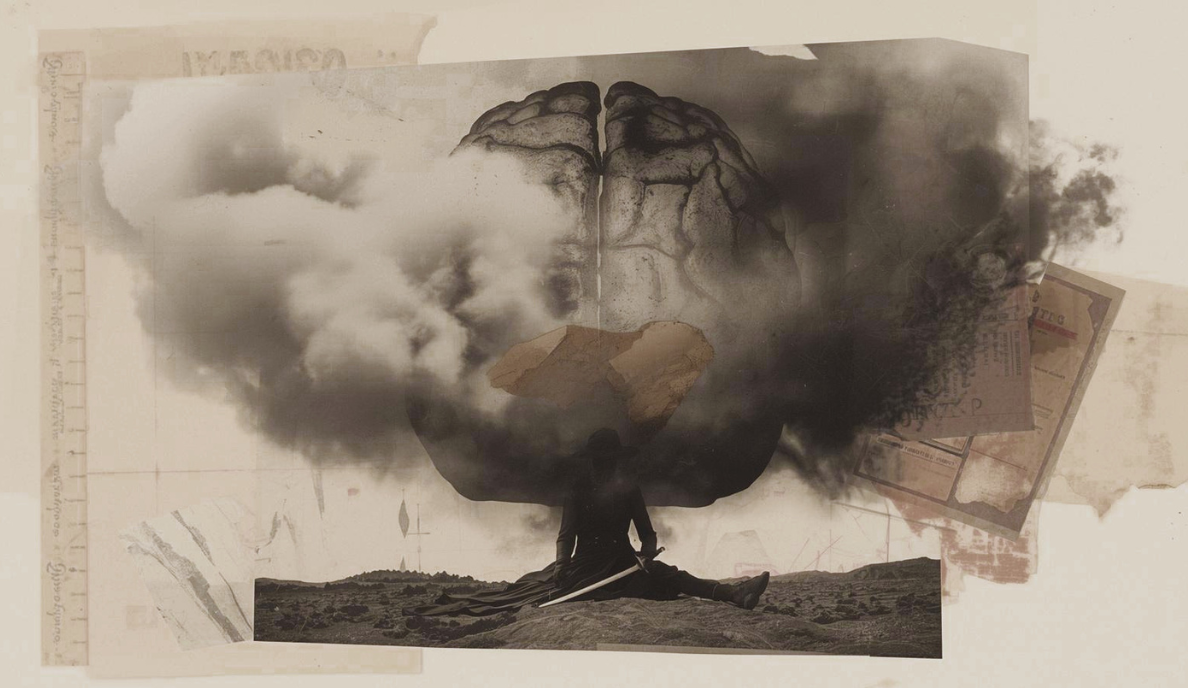
There is a reason things don’t fully clear and it’s not the one you’ve been given. Not in the temporary sense of feeling better for a moment, not as symptom relief, and not as a short-lived calm that fades as quickly as it arrives. I mean resolution in its actual sense: where a pattern completes and does not return. Where the reaction no longer reactivates, the thought no longer loops, and the behavior no longer repeats itself under slightly different conditions. That level of completion is what most people are reaching for, but it is also what remains just out of reach, no matter how much is done to try to fix it.
What you experience instead is something subtler, but far more consistent: a cycle. Something shifts, something eases, something appears to change—and then, at some point, it comes back. Sometimes in the same form, sometimes slightly altered, sometimes attached to a new situation that seems unrelated at first glance. It creates the impression that progress is being made, when in reality the pattern has not resolved. It has only moved. It has adapted just enough to remain in place without being recognized as the same thing.
Because of this, most people are taught to treat each instance as a separate issue. One reaction is managed, one thought is reframed, one behavior is corrected. But underneath that approach, something remains constant. The same emotional charge, the same internal friction, the same sense of repetition that doesn’t quite make sense. It begins to feel like coincidence, or personality, or something inherent—when in reality it is structure. A system running in a way that was never meant to be seen directly.
And that system has a point of entry.
Not in your mindset.
Not in your beliefs.
But in the way your brain is running mimic code.
Because if a pattern never completes, it doesn’t disappear—it repeats. And if it repeats long enough, it stops being recognized as a pattern at all. It becomes familiar. It becomes normal. It becomes something you assume is just part of how you are. But what you’re experiencing is not just thought or behavior—it is a process being executed through the brain that has been conditioned to run mimic code instead of allowing signal to complete.
It isn’t random. And it isn’t natural. And once you see where in the brain this is happening, and how those pathways have been conditioned to loop instead of resolve, the entire structure begins to break. Not gradually, not through management, but at the level where the pattern was first installed.
Why Your Thoughts and Behaviors Keep Repeating (The Missing Piece)
What you are experiencing is not just psychological, and it isn’t something that can be fully explained by mindset, personality, or past experience alone. There is a structural component to what is happening, something embedded in how your system is processing and executing patterns. This is why the same reactions, thoughts, and behaviors continue to surface even after you’ve become aware of them. Awareness alone does not interrupt the mechanism, because the mechanism is not being generated at the level of conscious thought.
The brain is not simply producing your thoughts and behaviors in real time; it is running pre-conditioned patterns that have already been installed. These patterns are triggered, executed, and reinforced automatically, often before you are consciously aware of them. This is why so many responses feel immediate and difficult to control. By the time you notice what’s happening, the pattern is already in motion. What feels like a choice is often just the moment you become aware of a process that has already begun.
And those patterns are not neutral. They are part of a larger system that sustains repetition rather than resolution. Instead of allowing a process to complete, they keep it active: looping, adapting, and reinforcing itself over time. This is what creates the sense of being stuck in something that doesn’t fully clear. You’re not just dealing with isolated behaviors or thoughts. You’re dealing with a system that has been conditioned to run in a way that prevents completion.
What Is Amenta?
Why Your Patterns Keep Repeating and Never Resolve
Amenta is the field that sustains repetition. It is not a place, and it is not a belief system you can opt in or out of. It is a field intelligence—a structured, hierarchical system that organizes how patterns are processed and maintained. What makes it distinct is that it does not operate to complete processes. It operates to keep them active. Amenta is built on hierarchy, and that hierarchy sustains itself by keeping signal from reaching completion.
Within Amenta, everything is routed through layers instead of resolved. Each layer interprets, redirects, or contains what is moving through it. Instead of a process reaching an endpoint, it gets distributed across levels, which creates continuation instead of closure. This is what makes it a looping field. The system does not need to stop a pattern; it only needs to prevent it from finishing. As long as it remains incomplete, it continues to generate output.
This is why patterns do not resolve, reactions do not complete, and behaviors repeat instead of clear. The system is not malfunctioning—it is operating exactly as designed. It sustains itself by keeping everything in motion without allowing it to close. A completed signal would collapse the loop. So the system maintains activity, fragmentation, and repetition instead.
That is also why you can process something and still feel it, understand something and still repeat it, or “heal” something and still experience it again. The appearance of progress is not the same as completion. The pattern may shift, adapt, or express differently, but it remains active because it has not reached the point where it can resolve.
Because the loop was never completed, it continues. Not as a mistake, and not as a failure on your part, but as a function of a hierarchical system that depends on repetition to sustain itself.
Signal vs Mimic Code:
Why Your Brain Keeps Running Patterns That Don’t Resolve
To understand why your thoughts, reactions, and behaviors keep repeating, you have to understand the difference between signal and mimic code. What most people experience as their internal world is not purely original; it is a mix of direct intelligence and conditioned replication. Without distinguishing between the two, everything feels like it’s coming from the same place. But it isn’t. One resolves. The other loops.
Signal is original instruction. It is not thought, emotion, or interpretation; it is the underlying intelligence that organizes and completes processes. When signal is clear, the system does not need to force resolution. Patterns complete on their own. States reset without effort. Conditions clear because they have reached their endpoint. Signal moves cleanly, and because it moves cleanly, it finishes what it starts. There is no excess, no repetition, and no need to manage what has already resolved.
Mimic, and more specifically mimic code, is different. Mimic is imitation without origin—it replicates structure, language, and behavior, but it does not carry signal. Mimic code is how that imitation gets installed and run through the brain. It creates patterns that look functional, sound accurate, and even feel convincing, but they do not resolve. Instead, they generate repetition. This is where false solutions, repeated frameworks, and endless processing come from. Most systems presented as self-development, healing, spirituality, or optimization operate within mimic. They provide methods to adjust the loop, refine it, or manage it—but not to complete it.
This is why so much effort leads to temporary change but not full resolution. If the brain is running mimic code instead of allowing signal to move, the process will continue regardless of how it is managed. The loop may become more sophisticated, more aware, or more controlled, but it remains a loop. Understanding the difference between signal and mimic code is the first point where the system begins to break, because it reveals that what feels internal and personal is often just a pattern being run—not a process being completed.
Signal Distortion in the Brain:
How the 7 Brain Chambers Create Repeating Patterns
Signal distortion begins in the brain—specifically within the seven brain chambers that process, route, and execute patterning. Each chamber is designed to handle a specific function, but when distortion is present, they do not allow signal to move cleanly. Instead of completing, the signal becomes altered as it passes through these chambers. It fragments, loops, redirects, and reinforces itself. What should move through and resolve gets caught in the system, and once it is caught, it begins to repeat.
This is where your symptoms come from. Not from a lack of effort, and not from a lack of awareness, but from signal that cannot complete because the brain chambers are not processing it cleanly. One chamber may amplify it, another may loop it, another may store and retrigger it, while another attempts to process it endlessly without reaching a conclusion. The result is not a single point of failure; it is a coordinated distortion where each chamber contributes to sustaining the pattern instead of allowing it to finish.
One way to understand this is to imagine each brain chamber covered by a veil. The chamber itself is intact (it still functions) but the veil distorts how signal moves through it. Instead of passing clearly from one point to the next, the signal is filtered, bent, and redirected. It doesn’t disappear—it becomes trapped in the chamber, cycling through it instead of moving beyond it. And because it never passes cleanly through all chambers, it never reaches the point where it can complete.
That veil is what prevents signal from reaching the morphogenetic field, the level where patterns resolve. The chambers are not broken; they are obscured. As long as that veil is present, the system continues to run loops instead of completing processes. But when the veil is cleared, signal is no longer contained within the chambers. It moves through them, reaches the morphogenetic field, and resolves naturally—ending the pattern instead of repeating it.
How the Brain Chambers Create Repeating Patterns: The Hidden Mechanism Behind Thought Loops and Behavior
The brain is not a single, unified system producing thoughts and behaviors in real time. It is a network of distinct functional chambers, each responsible for a specific type of processing: emotional response, memory, analysis, regulation, pattern execution, and integration. Under normal conditions, these chambers work in sequence. Signal moves through them, each one contributing to the process, until the pattern completes and resolves. But when distortion is present, that process breaks down. Instead of moving forward, the signal gets caught. Each chamber either amplifies it, redirects it, or loops it, turning what should be a finite process into a repeating one.
The hijack does not happen through control; it happens through interruption of completion. A process begins, but it does not finish. And when something does not finish, it repeats. At first, the repetition is noticeable. Then it becomes familiar. Over time, it becomes normalized. Eventually, it becomes invisible—something you assume is just part of how you think, feel, or behave. But what you are experiencing is not identity. It is a process that has been interrupted and set into a loop.
This can be seen clearly in the amygdala, which governs rapid emotional responses. A conversation happens, and something subtle shifts: a tone, a word, a look. The amygdala activates immediately. But instead of moving through activation, processing, and resolution, the signal stalls. It amplifies and repeats. The response becomes stronger than the input, and similar cues begin triggering the same reaction automatically. This is why certain interactions feel charged, even when they shouldn’t. It is not personality; it is an emotional loop that never completed.
The same structure appears in the neocortex, where analytical processing takes place. You read a message, and the system begins interpreting it. But no conclusion is reached. Instead of processing the input and finishing, the brain cycles through analysis repeatedly. Each pass generates a new possibility, a new interpretation, a new layer, but none of them resolve. The result is escalation instead of clarity. You reread, reinterpret, and reconsider without landing. This is not overthinking; it is a process that never produced a final output.
And in the cerebellum, this pattern becomes fully automated. A behavior is repeated enough times that it is stored as a sequence. At that point, it no longer requires conscious initiation. You pick up your phone, start scrolling, and continue without a clear decision point. The sequence was already encoded, triggered, and executed. There is no interruption and no resolution—only repetition. This is how the brain chambers, once distorted, stop functioning as processors and begin functioning as loop generators, sustaining patterns instead of completing them.
This pattern is not limited to just a few responses or behaviors; it extends across all seven brain chambers, each one contributing to how signal is processed, distorted, or completed. What you’ve seen here are only a few entry points into the system. The amygdala, neocortex, and cerebellum each reveal a different way the loop is sustained, but the same mechanism applies across every chamber. When distortion is present, each one participates in keeping the pattern active instead of allowing it to resolve. Understanding this is what begins to shift the perspective—from trying to manage isolated symptoms to recognizing the full architecture of how the loop is being maintained.
Why Nothing Works: Why Your Thoughts, Behaviors, and Patterns Keep Repeating
Most approaches fail because they operate at the surface layer, targeting what you can see rather than where the pattern is actually being generated. They focus on regulating the response, managing the behavior, or reframing the thought, assuming that if you change the expression, the issue will resolve. But these methods never reach the level of the brain chambers where the loop is being created and sustained. They work with the output, not the mechanism.
Because of this, the pattern doesn’t stop—it adjusts. It may pause for a period of time, shift into a different form, or adapt to a new context, creating the illusion of progress. But underneath that shift, the same structure remains active. The loop continues because it was never completed. And until the process is interrupted at the level where it is being generated, it will continue to repeat, regardless of how well it is managed on the surface.

What you've just read is not a standalone article.
It is one fragment of a much larger cartography devoted to field mechanics, containment structures, intermediary systems, and the conditions required to exit them. Every essay published here belongs to the same architecture. Nothing exists in isolation.
These articles are intended to introduce individual ideas. The complete worldview emerges only when those ideas are assembled into a coherent landscape.
That landscape is The Living Atlas.

I'm Angel Quintana, creator of Sacred Anarchy and The Occult Château, and author of this body of work.
The Living Atlas is the official monthly publication of Sacred Anarchy and the primary point of entry into this cosmology. Each issue explores a single foundational concept through historical orientation, developmental analysis, and cosmological integration, allowing the larger architecture to reveal itself one volume at a time.
If this article raised more questions than it answered, it has done exactly what it was designed to do. The Living Atlas is where those questions continue.
If you're already reading The Living Atlas and want to move deeper into the mechanics behind the published work, the Keeper of the Keys Archive extends the cosmology through advanced transmissions and ongoing development.
Nothing here asks for agreement.
It asks only to be read carefully.