
Waiting for the Green Light? Permission Culture in the Age of Reassurance
The Moment Before You Move
Every meaningful decision contains a quiet moment that few people ever examine. It happens just before saying yes. Just before leaving a job, beginning a relationship, launching a business, making a purchase, or changing direction. For an instant, movement pauses. Rather than stepping forward, many people begin looking outward. They search for something that will make the decision feel unquestionably right.
That reassurance can take many forms. Some call a trusted friend. Others consult an expert. Some refresh search results, ask artificial intelligence, pull a tarot card, notice an angel number, read a horoscope, revisit a manifestation practice, or wait for what they describe as a sign from the universe. None of these actions necessarily appear unusual in isolation. In fact, many are celebrated as thoughtful, responsible, or spiritually aware ways of making decisions.
The pattern becomes more interesting when viewed as a whole. Despite their differences, each of these practices can quietly serve the same purpose. They shift the source of certainty away from direct participation and toward external authorization. The question is no longer simply, What feels true? It gradually becomes, Has reality approved this yet? Waiting begins to feel wiser than moving.
This investigation is not about whether signs, intuition, astrology, artificial intelligence, or spiritual practices are valid. It asks a different question entirely. What is Amenta feeding on when reassurance becomes a prerequisite for action, and why has waiting for the green light begun to feel more comfortable than authorship itself?
Why Permission Feels Better Than Uncertainty
The Black Box operating system is remarkably effective at answering one of humanity’s oldest discomforts: uncertainty. While people often describe themselves as wanting freedom, freedom without certainty can feel deeply unsettling. The ability to choose also carries the possibility of choosing poorly. In that moment, external authorization offers immediate relief. If someone else knows the right answer, the weight of deciding no longer feels entirely your own.
The source of that authorization changes from person to person, but the pattern remains strikingly consistent. A child looks to a parent. A student looks to a teacher. An employee looks to a manager. A patient looks to a doctor. A spiritual seeker looks to a guru, an angel number, a tarot reading, or a sign from the universe. Someone else consults artificial intelligence before making an important decision. The authority changes. The relationship to authority often does not.
This is what makes Permission Culture so difficult to recognize. It rarely presents itself as dependence. It often appears as wisdom, humility, responsibility, or careful decision-making. Waiting feels mature. Seeking another opinion feels prudent. Looking for confirmation appears thoughtful. The behavior becomes so culturally accepted that very few people stop to ask why movement has become so difficult without reassurance.
Permission offers more than certainty. It offers protection from authorship. If the decision belongs to an expert, a system, a sign, or fate itself, then responsibility becomes easier to share. The Black Box operating system quietly rewards this arrangement because every moment spent waiting for authorization is a moment direct participation has been postponed. In that way, waiting begins to feel wiser than originating, even when nothing is actually moving at all.
Permission Culture teaches people to trust reassurance before they trust Signal.
Field Observation
The Search for Reassurance
Permission Culture is easy to mistake for spirituality because some of its most visible expressions involve signs, symbols, and mystical practices. Yet the condition reaches far beyond any single belief system. One person waits for an angel number. Another pulls a tarot card. Someone else studies astrology, consults a psychic, refreshes a search engine, asks artificial intelligence, or calls five different friends hoping one of them will finally provide the answer that feels certain. The methods appear different. The movement beneath them is often remarkably similar.
The investigation is not concerned with whether any of these practices contain value. A tarot reading may provoke meaningful reflection. Astrology may offer language that resonates. Artificial intelligence may help organize information. Wise friends may illuminate possibilities you had not considered. None of these are the condition. They become part of the condition only when they quietly replace direct participation with the need for external reassurance.
This is the subtle moment where reality itself begins functioning like a decision maker. Instead of observing symbols, people begin negotiating with them. Instead of consulting tools, they begin waiting for those tools to authorize movement. A repeating number is no longer simply noticed. It must mean something. A card is no longer explored. It must decide something. The question quietly shifts from, What am I seeing? to, What is reality telling me to do?
That shift reveals the architecture of Permission Culture. The issue has never been angel numbers, tarot, artificial intelligence, or advice from trusted people. Those are merely different languages through which reassurance is sought. The maintenance condition emerges when movement no longer feels legitimate until something outside yourself appears to approve it. At that point, the search is no longer for understanding. It has become a search for permission.
How Direct Knowing Slowly Gets Replaced
Very few people wake up one morning and decide they no longer trust themselves. The movement is almost always gradual. One opinion becomes three. One expert leads to another. One tarot reading is followed by a second for reassurance. One conversation with artificial intelligence turns into another because the previous answer did not feel quite certain enough. Each request appears reasonable on its own. Together, they begin establishing a new relationship with decision-making.
This gradual shift can be understood as Authorization Drift. Rather than participating directly, people begin orbiting an expanding network of confirmations. Movement becomes increasingly dependent upon receiving another signal from outside themselves before taking the next step. The drift is subtle because it feels responsible. It appears to reduce mistakes. In reality, it quietly changes where authority is believed to reside.
This is where Signal becomes easy to misunderstand. Signal does not function as another voice competing with experts, signs, algorithms, or spiritual systems. It does not issue commands or tell people what decision to make. Signal participates. It emerges through direct relationship with what is actually present rather than through continual negotiation with external authorization. The quieter Signal becomes, the louder reassurance often appears to feel.
Authorization Drift is not the loss of intelligence or discernment. It is the gradual replacement of direct participation with increasing dependence upon confirmation. Every request for reassurance quietly teaches the Black Box operating system that movement should wait until something outside the self appears to approve it. The tragedy is not that people stop making decisions. It is that they slowly forget what it feels like to recognize Signal before asking the world what it thinks.
The Black Box operating system does not prevent movement. It teaches people to wait until movement feels authorized.
Field Observation
The Age of Reassurance
Modern culture has become remarkably skilled at recognizing uncertainty as a market opportunity. Every hesitation creates demand for another answer. Every difficult decision becomes another opportunity to provide guidance, prediction, interpretation, or reassurance. The more uncertain people feel, the more valuable certainty becomes. What was once a human emotion has quietly become an economy.
This pattern extends far beyond any single industry. Social media algorithms learn which content keeps people returning. Influencers discover that certainty attracts loyal audiences. Artificial intelligence receives millions of questions asking what to do, what something means, whether a decision is right, or what comes next. Search engines, coaches, consultants, and content creators all participate in the same expanding marketplace. The products differ. The reassurance remains remarkably consistent.
None of this requires deception. Many of these tools genuinely help people think more clearly. The investigation is not asking whether reassurance has value. It asks what happens when reassurance becomes so abundant that direct participation begins feeling unnecessary. When another opinion is always available, uncertainty no longer becomes something to move through. It becomes something to eliminate.
This is the atmosphere Permission Culture thrives within. The Age of Reassurance is not defined by the amount of information available, but by the growing expectation that every decision should arrive accompanied by external confirmation. The Black Box operating system quietly rewards this arrangement because every answer that postpones authorship creates another reason to return. Reassurance has become one of the most valuable products modern culture knows how to sell, not because people lack intelligence, but because uncertainty has become increasingly difficult to inhabit.
The Cost of Waiting
Waiting rarely feels like waiting while it is happening. It feels responsible. Someone delays launching a business until they feel completely certain. Another postpones ending a relationship because they are waiting for one unmistakable sign. A creative project remains unfinished because the timing never feels quite right. A difficult conversation is pushed into next week after one more tarot reading, another opinion, or another late-night search for confirmation. Each delay appears reasonable on its own. Together, they quietly become a way of participating in life.
The condition becomes especially difficult to recognize because movement never completely stops. People continue researching, planning, preparing, journaling, asking questions, gathering information, and refining possibilities. From the outside, they appear deeply engaged. Yet much of that activity circles the same decision without ever entering it. The appearance of progress slowly replaces progress itself. Preparation becomes a destination rather than a bridge.
This is the hidden cost of reassurance. Decisions become negotiations with the future instead of expressions of direct participation. Every symbol must be interpreted. Every uncertainty must be resolved. Every hesitation requires another answer before movement feels justified. Life gradually becomes conditional. I’ll begin when I know. I’ll move when the sign appears. I’ll decide when I’m finally certain. The green light is always expected to arrive tomorrow.
Permission Culture does not ask people to abandon their lives. It simply teaches them to postpone authorship one reassurance at a time. The Black Box operating system does not need to prevent movement. It only needs to keep movement waiting for confirmation. By the time reassurance finally arrives, another question has usually taken its place. The waiting continues, and with it, the quiet habit of allowing certainty to decide before participation ever has the chance.
The Green Light Never Arrives
Permission Culture rarely tells people to stop living. It simply teaches them to wait. One more expert. One more sign. One more reading. One more conversation. One more answer that will finally remove the uncertainty of moving without reassurance.
The waiting rarely feels like surrender. It feels responsible. Careful. Thoughtful. Wise. Yet each request for another confirmation quietly postpones authorship. Action remains just over the horizon, always scheduled to begin after certainty finally arrives.
This is what makes Permission Culture such an effective maintenance condition. The most effective permission is the permission that never arrives. As long as reassurance remains just beyond reach, participation can always be deferred one more day. The Black Box operating system does not need to prevent movement. It only needs to convince people that movement should wait until reality appears to approve it.
Permission Culture feeds Amenta through sovereignty surrendered for reassurance. The green light was never the point. It was the waiting. Because the longer people negotiate with reality for permission to move, the longer authorship remains suspended, quietly believing that certainty will someday arrive from somewhere outside themselves.
Related Articles
• Why You Feel Disconnected From Your Origin
• What Is “Crossing the Abyss?”
• The Roadmap Out of Hell Was Hidden. Until Now.
Glossary
• Signal

What you've just read is not a standalone article.
It is one fragment of a much larger cartography devoted to field mechanics, containment structures, intermediary systems, and the conditions required to exit them. Every essay published here belongs to the same architecture. Nothing exists in isolation.
These articles are intended to introduce individual ideas. The complete worldview emerges only when those ideas are assembled into a coherent landscape.
That landscape is The Living Atlas.
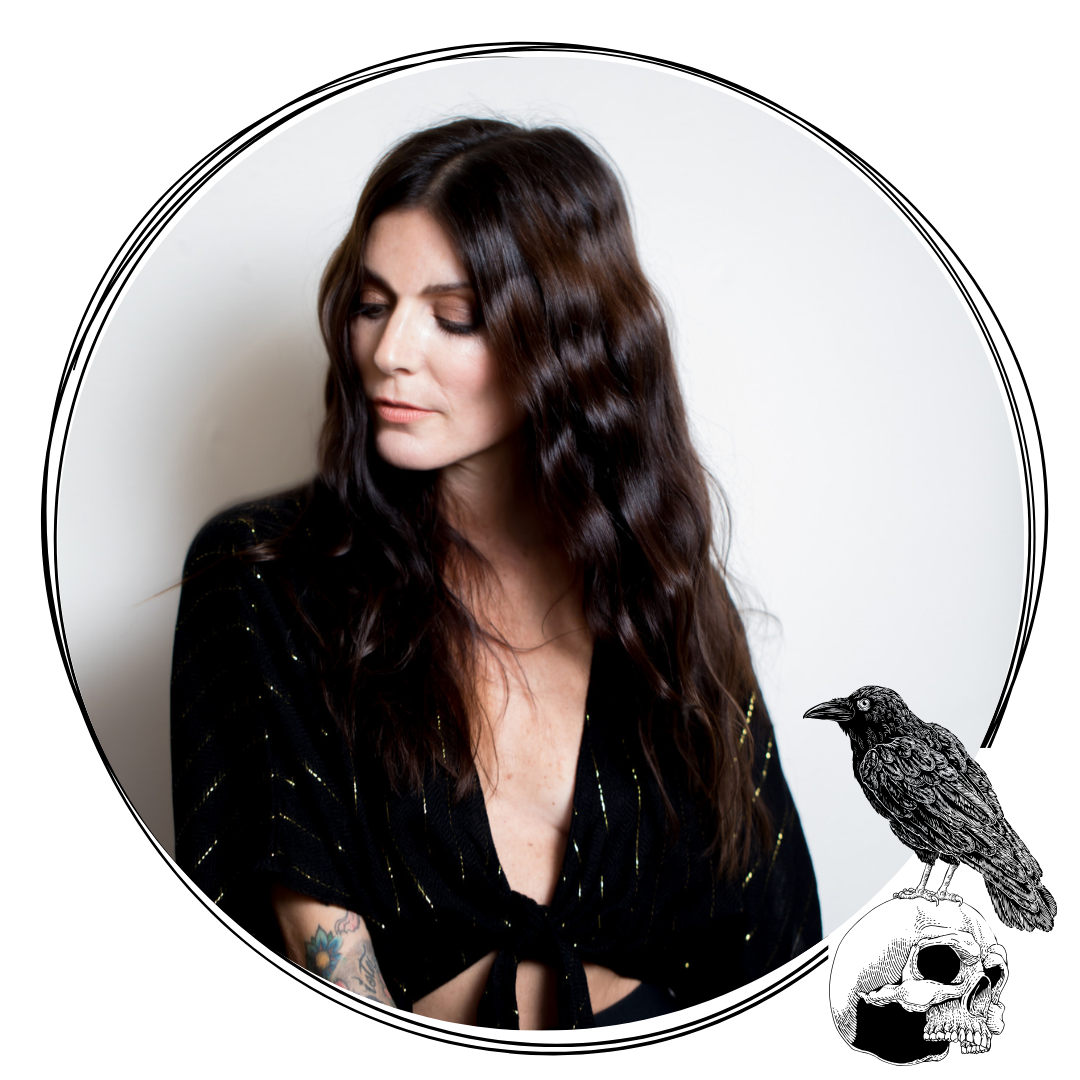
I'm Angel Quintana, creator of Sacred Anarchy and The Occult Château, and author of this body of work.
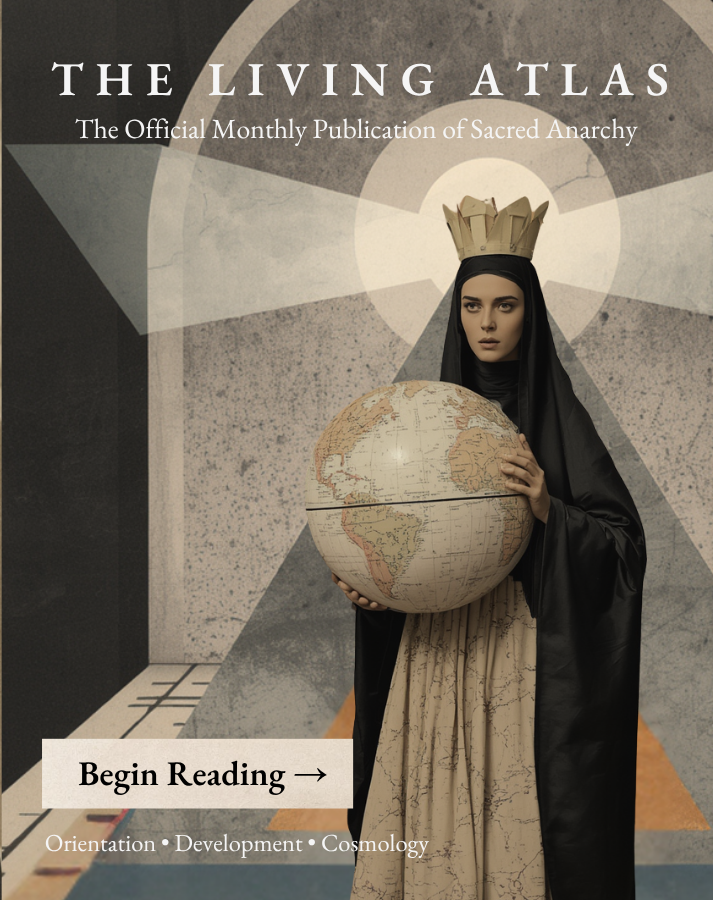
The Living Atlas is the official monthly publication of Sacred Anarchy and the primary point of entry into this cosmology. Each issue explores a single foundational concept through historical orientation, developmental analysis, and cosmological integration, allowing the larger architecture to reveal itself one volume at a time.
If this article raised more questions than it answered, it has done exactly what it was designed to do. The Living Atlas is where those questions continue.
If you're already reading The Living Atlas and want to move deeper into the mechanics behind the published work, the Keeper of the Keys Archive extends the cosmology through advanced transmissions and ongoing development.
Nothing here asks for agreement.
It asks only to be read carefully.